
A car crash can create immediate problems: pain, medical appointments, vehicle damage, missed work, and difficult conversations with insurance companies. The decisions you make in the days and weeks afterward can affect both your recovery and your ability to document an injury claim.
Some mistakes happen because people are trying to move on quickly. Others occur because an insurance adjuster asks for information before the injured person understands the extent of the damage. If you were hurt in Massillon, Canton, Stark County, or another Ohio community, knowing what to avoid can help you protect important evidence and make informed decisions.
This article provides general information, not legal advice for a particular accident. The facts of each crash matter, including the injuries, available insurance coverage, evidence, and any dispute about fault.
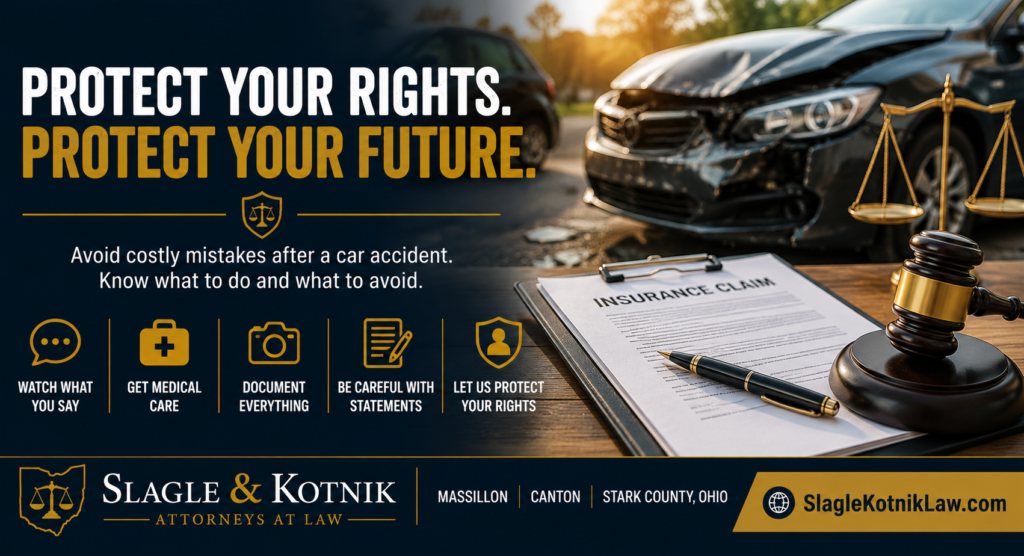
1. Waiting to Get Medical Care
Some people leave a crash scene believing they are only shaken up. Pain from whiplash, soft-tissue injuries, back injuries, or other conditions may not be obvious immediately. A concussion or another injury may also require prompt evaluation even when there are no visible wounds.
Seeking medical attention does not guarantee a particular legal result, but it helps put your health first and creates a record of your symptoms and treatment. Waiting can make it harder to determine whether a condition is connected to the crash. An insurer may also question a gap between the accident and the first medical visit.
Follow the advice of the medical professional who evaluates you. Tell the provider what happened, describe all symptoms accurately, and mention if symptoms change or worsen. If you are concerned about medical bills, keep the bills and insurance correspondence. You can also review information about medical bills after a car accident in Ohio.
2. Giving an Unprepared Recorded Statement
An insurance adjuster may contact you soon after the collision. The adjuster may ask how the crash happened, what injuries you have, and whether you have had similar symptoms before. You should be truthful, but you do not have to guess, minimize your symptoms, or speculate about facts you do not know.
A recorded statement can preserve your words and later be compared with medical records, witness accounts, photographs, or the police report. Casual comments such as “I feel fine” may not reflect symptoms that develop later. A short conversation may also leave out important details about pain, treatment, or how the injury affects daily activities.
Before agreeing to a recorded statement, consider getting legal advice about what the request means and what information is relevant. Do not provide false information, but avoid volunteering conclusions or details that you are not certain about.
3. Failing to Preserve Evidence
Evidence can become harder to locate as time passes. Vehicles may be repaired or sold, roadway conditions may change, and witnesses may forget what they saw. Take reasonable steps to preserve information when it is safe to do so.
- Photograph the vehicles from multiple angles, including damage, license plates, and the surrounding scene.
- Document road conditions, traffic signals, lane markings, weather, debris, and visible injuries.
- Write down what you remember while the details are still fresh.
- Obtain names and contact information for witnesses.
- Keep the crash report, medical records, bills, prescriptions, repair estimates, and insurance letters.
- Save photographs and messages in more than one location so they are not accidentally lost.
Do not put yourself in danger to collect photographs or inspect a vehicle. If you cannot safely gather evidence at the scene, information may still be available later through witnesses, records, vehicle evidence, or other sources.
4. Posting About the Accident or Your Recovery on Social Media
Public posts, photographs, videos, check-ins, and comments can be misunderstood when viewed without context. A picture at a family event, a statement that you are having a good day, or a post showing physical activity may be used to question the severity of an injury even though one image does not show your full condition.
Privacy settings are not a complete solution. Content can be copied, shared, or obtained through the legal process. Avoid discussing the crash, your injuries, fault, treatment, or a possible claim online. Do not delete existing content simply because it may be relevant. Preserve it and ask an attorney how to handle social media evidence.
5. Accepting a Settlement Before Understanding the Claim
An early settlement offer may seem helpful when medical bills are arriving and income has been interrupted. The offer may be made before you know whether you will need additional treatment, physical therapy, surgery, or time away from work.
Before signing a release, consider whether the amount accounts for the injuries, past and anticipated medical care, lost income, property damage, and other losses supported by the facts. A release can affect your ability to pursue additional payment for the same accident. The terms of the offer matter, including what claims are being released and how payment is allocated.
Do not feel pressured to decide during a phone call. You can request the offer in writing and review it carefully. Our article on an Ohio settlement offer after an accident explains why an early proposal deserves careful review.
6. Ignoring Medical Instructions or Losing Track of Treatment
Medical care is primarily about your health, not building a lawsuit. Still, missed appointments, unexplained treatment gaps, or stopping therapy without discussing it with a provider can create questions about your condition and recovery.
Keep appointments when possible and follow the treatment plan you and your provider choose. If transportation, cost, work, side effects, or another problem prevents you from attending, tell the provider and ask about available alternatives. Keep a simple record of appointments, symptoms, medications, limitations, and out-of-pocket expenses.
Be consistent and accurate when describing your condition. Do not exaggerate symptoms, but do not dismiss them either. Tell your provider how the injury affects sleep, work, household responsibilities, driving, exercise, and ordinary activities when those limitations are part of your experience.
7. Waiting Until the Claim Is Denied to Seek Legal Guidance
Many injured people contact a lawyer only after an insurer denies responsibility or makes a low offer. Waiting can make the case more difficult if evidence has disappeared, important records were not requested, or statements were made without understanding their significance.
An attorney can review the accident circumstances, identify potential sources of evidence, communicate with insurers, examine medical records, and discuss the issues that may affect a claim. Legal guidance is particularly important when injuries are serious, treatment is ongoing, fault is disputed, multiple vehicles are involved, or you have questions about insurance coverage.
Ohio law includes rules that can affect personal injury claims, including rules concerning deadlines and responsibility for losses. The Ohio Revised Code is the state’s official source for statutes, but identifying which provisions apply requires examining the facts of the accident. Do not assume that a general online deadline applies to your situation.
What to Do After an Ohio Car Accident
If you are able to do so safely, these steps may help after a collision:
- Call 911 when someone is injured or emergency assistance is needed.
- Move to a safe location if possible and follow directions from emergency personnel.
- Exchange required identifying and insurance information with the other driver.
- Report the collision to law enforcement when appropriate.
- Seek medical evaluation for injuries or symptoms, including symptoms that appear later.
- Photograph the scene and vehicles without putting yourself or others at risk.
- Gather witness information and preserve the crash report and related records.
- Notify your insurer as required by your policy, but be careful not to speculate about fault or the extent of injuries.
- Keep a file for medical records, bills, wage information, repair documents, and correspondence.
- Get advice before signing a release or accepting a settlement when the claim is disputed or injuries are ongoing.
For additional general safety information, the National Highway Traffic Safety Administration provides resources about safe driving and crash prevention.
What Losses May Be Part of a Car Accident Claim?
The losses that may be considered depend on the evidence and circumstances. They may include reasonable medical expenses, anticipated medical care, lost wages, reduced ability to earn income, property damage, rehabilitation costs, and the physical or emotional effects of an injury. Not every claim includes every category, and the amount of any loss must be supported by the facts.
It is useful to keep records rather than rely on memory. Save invoices, receipts, employer information, wage documentation, appointment notes, and written communications. A daily symptom journal can also help you remember how an injury affects ordinary activities, but it should be truthful and factual.
When Should You Speak With an Ohio Car Accident Lawyer?
You may benefit from a consultation if you suffered an injury, missed work, need continuing treatment, are being asked to give a recorded statement, or believe another driver or insurer is disputing responsibility. A consultation can help you understand the issues without requiring you to make a decision before you have information.
Slagle & Kotnik represents injured people and families in Massillon, Canton, Stark County, and surrounding Ohio communities. Learn more about our car crash representation.
Frequently Asked Questions
Should I contact a lawyer after every car accident?
Not every collision requires legal representation. A consultation may be worthwhile when there are injuries, ongoing treatment, missed work, disputed fault, multiple insurance policies, or a proposed settlement.
Can an injury appear days after a crash?
Symptoms do not always appear immediately. Seek medical attention if symptoms develop or worsen, and tell the provider when and how the symptoms began. You can learn more about car accident injuries that show up days later in Ohio.
What if I was partly responsible?
Shared fault can affect a claim, but the result depends on the evidence and applicable Ohio law. Do not assume that an admission at the scene determines the legal outcome. Discuss the facts with an attorney before accepting responsibility or a settlement.
How long do I have to bring a claim?
Ohio deadlines vary with the type of claim and the facts involved. Waiting can create unnecessary risk, so consider getting advice promptly after an injury.
Contact Slagle & Kotnik After an Ohio Car Accident
Avoiding common mistakes cannot change what happened, but careful steps can help preserve information and support informed decisions. If you were injured in Massillon, Canton, Stark County, or a surrounding Ohio community, Slagle & Kotnik can discuss the circumstances and explain what options may be available. Contact the firm for a free consultation by calling 330-832-9833 or using the online contact form.