
After an accident, most people immediately think about emergency room bills, vehicle repairs, or time missed from work. While those financial losses are important, they often represent only part of the damage caused by a serious injury.
The physical pain, emotional distress, and disruption to your everyday life can continue long after your medical bills have been paid. Under Ohio law, these losses may be recoverable as pain and suffering damages.
If you were injured because another person acted negligently, you may be entitled to pursue compensation with help from an experienced Ohio personal injury attorney. Understanding how pain and suffering damages work can help you make informed decisions before accepting a settlement from an insurance company.
What Is Pain and Suffering?
Pain and suffering refers to the physical discomfort and emotional hardships an injury causes after an accident. Unlike medical expenses or lost income, these damages are known as non-economic damages because they cannot be measured with receipts, invoices, or pay stubs.
Although they are more difficult to calculate, they are often one of the largest parts of a personal injury claim because they reflect how an injury changes a person's daily life.
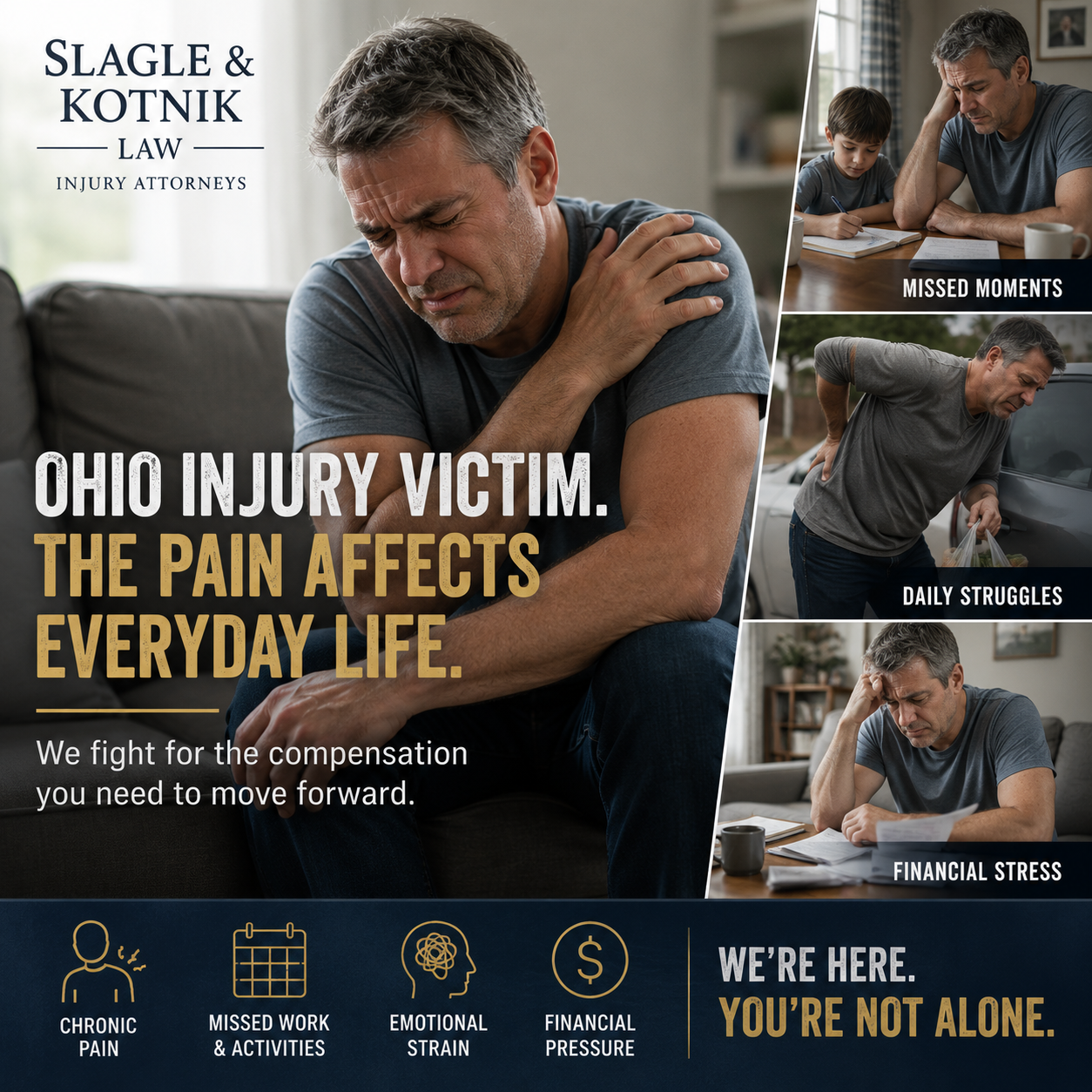
For example, someone recovering after a serious car accident may struggle with constant back pain, anxiety behind the wheel, difficulty sleeping, and an inability to participate in family activities for months or even years.
Examples of Pain and Suffering
Every injury affects people differently. Some individuals recover within a few weeks, while others continue living with physical and emotional challenges long after the accident.
Pain and suffering may include:
Chronic physical pain, Back and neck injuries, Loss of mobility, Permanent disabilities, Depression, anxiety, or emotional distress, Post-traumatic stress disorder, Difficulty sleeping, Loss of enjoyment of life, Permanent scarring or disfigurement, and Loss of independence or confidence.
Pain and suffering damages are intended to compensate accident victims for the real, lasting impact an injury has on their everyday lives.
How Is Pain and Suffering Calculated in Ohio?
There is no universal calculator that determines the value of pain and suffering. Every accident, injury, and recovery is different. Instead, insurance companies, attorneys, judges, and juries evaluate several factors.
Severity of the Injury
Serious injuries generally support greater pain and suffering damages than relatively minor injuries because they have a greater effect on a person's quality of life.
Length of Recovery
Someone recovering for several months often experiences greater physical discomfort, emotional stress, and financial uncertainty than someone who heals within a few weeks.
Medical Treatment
Emergency care, surgery, hospitalization, physical therapy, pain management, and ongoing medical treatment can help demonstrate the seriousness of an injury.
Permanent Limitations
Permanent disabilities, chronic pain, or lasting mobility issues may increase pain and suffering damages because they continue affecting daily life well into the future.
Effect on Daily Life
Insurers and juries may also consider whether an injury prevents someone from working, caring for family members, exercising, participating in hobbies, or enjoying activities they once loved.
Why Medical Evidence Is So Important
Medical records are often the foundation of a personal injury claim. They create a timeline of your injuries, document treatment, and help establish how your condition has affected your life.
Important medical evidence may include:
Emergency room and hospital records, X-rays, CT scans, and MRI results, Surgical reports, Physical therapy and pain-management records, Prescription history, Specialist evaluations, and Primary care physician notes.
Following your physician's treatment plan is equally important. Missing appointments or stopping treatment prematurely can give an insurance company an opportunity to argue that your injuries were not as serious as claimed.
Emotional Pain Is Real—and It Matters
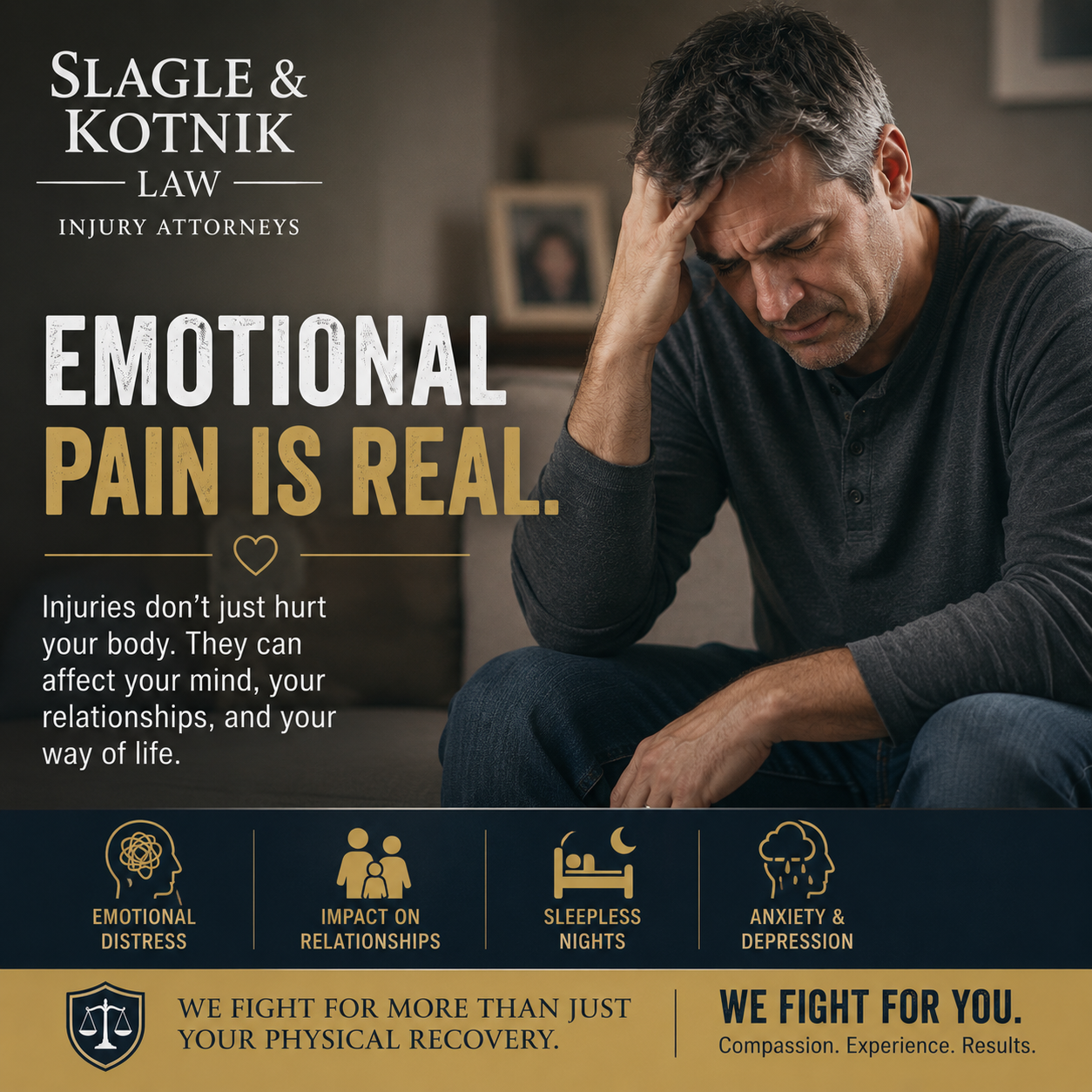
Pain and suffering involves more than physical injuries. Many accident victims also experience emotional trauma that affects their relationships, career, confidence, and overall quality of life.
Examples may include anxiety, depression, panic attacks, fear of driving, post-traumatic stress disorder, sleep problems, mood changes, and withdrawal from family or social activities.
Mental health professionals can provide valuable documentation supporting emotional injuries. Family members, close friends, and coworkers may also help explain how your life changed after the accident.
Permanent Injuries Often Result in Higher Compensation
Some injuries heal completely. Others never do. When an accident leaves permanent limitations, pain and suffering damages may become a larger part of the claim because the effects continue for years or a lifetime.
Permanent injuries may include traumatic brain injuries, spinal cord injuries, permanent nerve damage, loss of a limb, chronic pain, mobility limitations, severe burns, and permanent scarring or disfigurement.
Catastrophic injuries are also common in truck accident cases, where the size and weight of commercial vehicles can cause life-changing harm.
Can Insurance Companies Undervalue Pain and Suffering?
Yes. Insurance adjusters work for the insurance company, not for the injured person. Their objective is often to resolve claims for as little money as possible.
Common tactics may include questioning the seriousness of an injury, blaming a preexisting condition, arguing that treatment was unnecessary, monitoring social media, requesting recorded statements, or making an early settlement offer before the full extent of the injury is known.
Evidence That Can Strengthen Your Claim
Medical records are essential, but other evidence can help show the full effect of an injury. Useful evidence may include photographs, witness statements, expert medical opinions, therapy records, employment documentation, and statements from family members.
A daily recovery journal may also help document pain levels, sleep difficulties, medication side effects, emotional struggles, and activities you can no longer perform.
Does Ohio Law Limit Pain and Suffering Damages?
Ohio law permits recovery of economic and non-economic damages in appropriate personal injury cases. However, state law may limit certain non-economic damages depending on the facts, the severity of the injury, and whether a permanent and substantial physical condition exists.
For authoritative statutory information, review the Ohio Revised Code provisions addressing tort damages. Because the application of the law depends on the specific facts, speak with an attorney before relying on a general damages estimate.
Should You Accept the First Settlement Offer?
Often, accepting the first offer is not in an injured person's best interest. Insurers may make an early offer before treatment is complete. That offer may not include future medical care, ongoing rehabilitation, lost earning capacity, or the full value of pain and suffering.
Once a settlement agreement is signed, you generally cannot return later and seek more compensation, even if the injury becomes worse.
How an Experienced Personal Injury Attorney Can Help
An experienced attorney can investigate the accident, preserve evidence, review medical records, consult with experts, calculate economic and non-economic damages, communicate with insurers, negotiate a settlement, and file a lawsuit when necessary.
Frequently Asked Questions
Can I recover pain and suffering damages without broken bones?
Yes. Soft-tissue injuries, neck and back injuries, concussions, and other conditions can cause substantial pain and disruption even when no bone is broken.
How long does a personal injury claim take?
Every case is different. Some claims settle within months, while disputed or complex claims may require litigation and take longer. The timeline often depends on treatment, injury severity, available insurance, and whether liability is contested.
Do I need a lawyer?
You are not legally required to hire an attorney. However, experienced representation can help protect your rights, evaluate the claim, preserve evidence, and negotiate with insurers that routinely handle injury cases.
Contact Slagle & Kotnik Law
A serious injury can affect every part of your life—from your health and finances to your family and future. You should not have to face those challenges alone.
The attorneys at Slagle & Kotnik Law represent injury victims throughout Massillon, Canton, Stark County, and surrounding Ohio communities.
Whether you were injured in a car accident, truck accident, or another incident involving negligence, the legal team can review your situation and explain your options.
Disclaimer: This article is provided for general educational purposes and is not legal advice. Every personal injury case is different. Reading this article does not create an attorney-client relationship.