
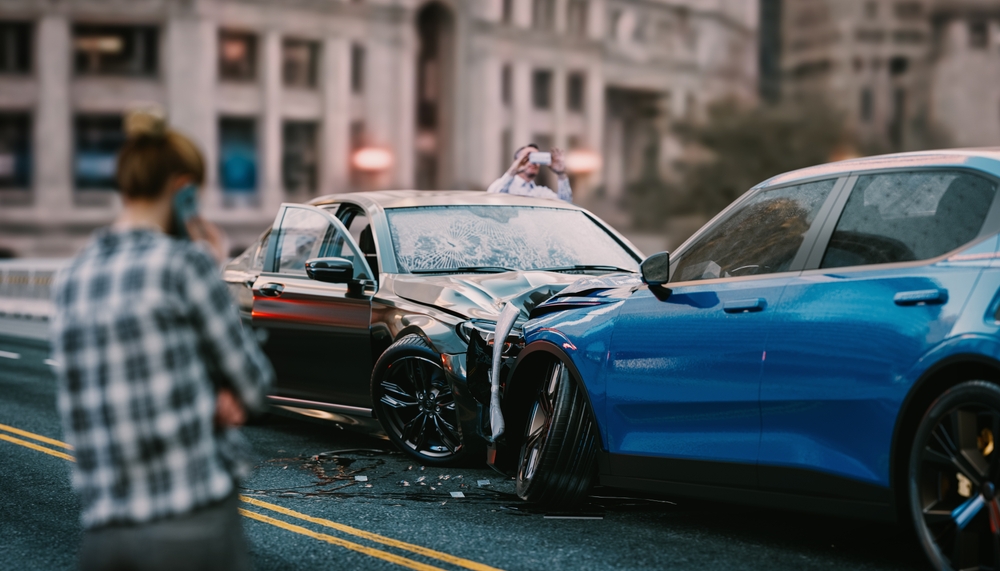
A car crash can leave you shaken, injured, and unsure what to do next. In the first few minutes, your priorities are safety and medical care. After that, the calls you make—and the information you share—can affect how the incident is documented and how you handle insurance and injury claims.
If your crash happened in Canton, Massillon, Stark County, or another Ohio community, this guide explains who to contact and what each person or organization can do. The right steps vary with the circumstances, so treat this as general information rather than individualized legal advice.
Call 911 when anyone may be injured or the crash creates a hazard
Call 911 immediately if anyone is hurt, a vehicle is blocking traffic, there is a risk of fire, or the scene is otherwise dangerous. Tell the dispatcher where the crash occurred, how many vehicles are involved, and whether anyone appears injured. If you are on a highway, give the direction of travel and the nearest exit or landmark if you can do so safely.
Remain at the scene. If your vehicle can be moved and doing so is safe, move it out of active traffic. Turn on your hazard lights and stay away from leaking fluids, damaged power lines, or unstable vehicles. Do not put yourself at risk to inspect damage or help someone when emergency personnel are on the way.
Cooperate with responding officers and provide accurate information. You can describe what you observed without guessing about facts you do not know. Avoid arguing with the other driver, admitting fault, or making statements such as “I was not hurt” before you have had a chance to assess your condition.
Speak with the investigating officer
The police officer may document the scene, identify the drivers and witnesses, and investigate possible traffic violations. Ask how you can obtain the crash report or learn its report number. A report can be useful when notifying insurers, arranging repairs, and keeping your records organized, although it is not the only evidence that may matter.
Give the officer your account clearly and honestly. If you do not remember something, say so. Do not feel pressured to reach an agreement with the other driver at the scene. A crash investigation and an insurance claim involve separate questions, and a determination about responsibility may require additional information.
Get medical care, even if symptoms seem minor
Contact emergency medical personnel at the scene when you need immediate attention. If you are not transported, arrange an appropriate medical evaluation as soon as practical if you have pain, dizziness, headaches, stiffness, numbness, limited movement, or any other concerning symptom. Some crash-related symptoms may not be obvious immediately, and a medical professional can determine what evaluation or treatment is appropriate.
Tell the provider that you were involved in a car crash and describe your symptoms accurately. Follow the care instructions you receive and keep copies of bills, discharge papers, prescriptions, referrals, and appointment information. Do not stop treatment or ignore worsening symptoms simply because vehicle damage appears minor.
Symptoms can appear hours or days after a collision. Our guide on car accident injuries that show up later in Ohio explains why delayed symptoms should still be taken seriously and documented.
Notify your own insurance company
Review your policy and notify your insurer about the crash promptly. Your insurer may need basic information about when and where the collision occurred, the vehicles involved, whether anyone was injured, and whether a police report was made. Follow the insurer’s instructions for photographs, estimates, towing, and claim documentation.
Be truthful and stick to facts you know. You do not need to speculate about speed, distance, fault, or the full extent of an injury while events are still being investigated. Keep a record of when you reported the crash, the claim number, the adjuster’s name, and the documents you provided.
Your own coverage may be relevant even if another driver appears responsible. The available coverage and the process for handling medical expenses or vehicle damage depend on the policy language and the facts of the crash. An insurance adjuster works for the insurer, so you should understand what you are saying before giving a recorded statement or signing documents.
The Ohio Department of Insurance provides consumer information about insurance matters. You can review its resources at the Ohio Department of Insurance.
Be careful when the other driver’s insurer calls
The other driver’s insurance company may contact you soon after the collision. The adjuster may ask for your version of events, medical information, photographs, or a recorded statement. You can provide basic identifying information and confirm that a crash occurred, but you do not have to rush into a detailed interview before you understand your position.
Do not minimize your symptoms, speculate about responsibility, or accept a settlement before you know the nature and extent of your losses. Do not sign a broad release without understanding what rights it may affect. If you are unsure how to respond, tell the adjuster that you are seeking legal advice and then discuss the request with an attorney.
Preserve evidence while it is available
Take photographs or video of the vehicles, their positions if they remain at the scene, road conditions, traffic controls, visible injuries, and property damage—only when doing so is safe. Save photographs in their original form when possible. Write down what you remember, including the time, location, weather, traffic conditions, direction of travel, and anything you heard or saw before impact.
Collect the names and contact information of other drivers and witnesses. Keep the insurance information exchanged at the scene, the crash report information, towing records, repair estimates, medical records, and receipts. If you missed work or had difficulty completing ordinary activities, maintain a simple record of those effects without exaggerating or guessing.
Preserve relevant electronic information as well. Do not delete photographs, text messages, dash-camera files, or other records connected to the crash. Avoid posting about the collision, your injuries, or your activities on social media. Public posts can be taken out of context and may complicate an insurance or injury claim.
Call a car accident attorney when injuries, disputes, or significant losses are involved
Consider speaking with a lawyer if you were injured, another driver disputes what happened, an insurer asks you to give a recorded statement, multiple vehicles were involved, a commercial vehicle was involved, or your losses are continuing. Legal guidance may also be useful when medical bills, lost income, vehicle damage, or other expenses are creating pressure.
An attorney can help you organize evidence, communicate with insurers, evaluate the issues raised by the crash, and explain the legal process. That does not guarantee a particular result, and not every collision requires a lawsuit. Early advice can help you make informed decisions before signing documents or accepting an offer.
Ohio law can involve questions about fault, insurance coverage, damages, and filing deadlines. The Ohio Revised Code is the state’s official source for statutes. Because the relevant rules depend on the circumstances, do not rely on a general online article to determine how those rules apply to your situation.
Slagle & Kotnik handles injury matters for people in Massillon, Canton, Stark County, and surrounding Ohio communities. Learn more about our car crash attorney services or contact the firm to discuss what happened.
Ask for practical support while you recover
A crash can affect more than your vehicle. Ask a trusted family member or friend for help with transportation, child care, errands, or appointments if pain or stress makes those tasks difficult. Keep your employer informed about necessary absences and save documentation related to missed work.
Pay attention to emotional as well as physical symptoms. Anxiety, sleep problems, fear of driving, and difficulty concentrating can follow a traumatic event. Speak with a qualified health professional if you are struggling. Seeking care is part of looking after yourself, not an admission that your injuries are more serious than they are.
What not to do after a car crash
- Do not leave the scene unless emergency circumstances require it or law enforcement directs you to leave.
- Do not argue with the other driver or make threats.
- Do not admit fault or guess about facts you cannot remember.
- Do not delay necessary medical care because you initially feel fine.
- Do not alter, discard, or delete photographs, records, or other potentially relevant evidence.
- Do not sign a settlement release or give a recorded statement without understanding the consequences.
- Do not post details or photographs about the crash on social media.
Contact Slagle & Kotnik after a Canton-area crash
If you or a family member was injured in a car crash, Slagle & Kotnik can listen to what happened and explain possible next steps. Bring or keep available your crash report information, insurance correspondence, medical records, photographs, and wage or expense documentation if you have them. A consultation is an opportunity to ask questions and decide how you want to proceed; it is not a promise of a particular outcome.
Call Slagle & Kotnik at 330-832-9833 for a free consultation, or visit slaglekotniklaw.com. The firm serves Massillon, Canton, Stark County, and surrounding Ohio communities.