
A car accident in Massillon can change your life in seconds. Even a crash that initially appears minor may lead to pain, missed work, vehicle damage, medical appointments, and difficult decisions about insurance. When another driver’s conduct contributes to the collision, you may have questions about your rights and the steps that can protect your interests.
The days after a crash are often stressful. You may be focused on treatment, transportation, bills, and family responsibilities while an insurance adjuster is asking for information. Taking practical steps early can help preserve important evidence and make it easier to understand what happened. This article provides general information about Massillon auto accident claims. It is not a substitute for advice about a specific situation.
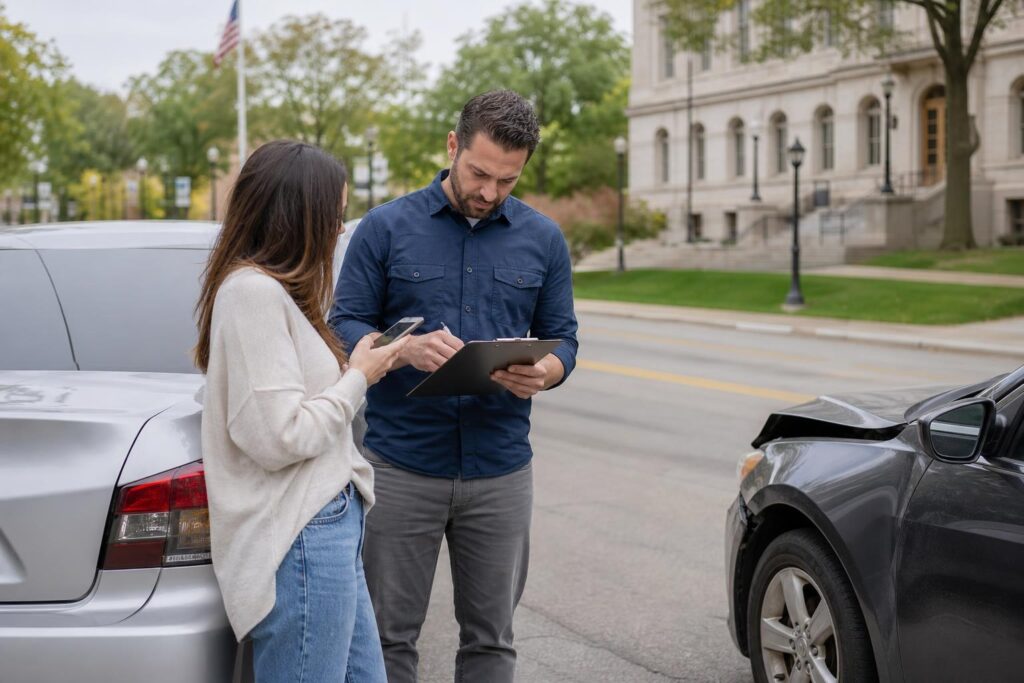
Common causes of auto accidents in Massillon
Auto accidents can happen for many reasons. A claim may involve one driver’s conduct, several contributing factors, or a dispute about how the crash occurred. Common examples include:
- Distracted driving, including texting, phone use, or other activities that take attention away from the road;
- Speeding or driving too fast for traffic, road, or weather conditions;
- Following too closely or failing to stop in time;
- Failure to yield, unsafe lane changes, or turning violations;
- Impaired or fatigued driving;
- Aggressive or reckless driving; and
- Hazards involving construction areas, poor visibility, snow, ice, or standing water.
Some collisions are straightforward. Others require a closer review of photographs, vehicle damage, witness accounts, traffic-camera footage, medical records, and the drivers’ statements. A police report can be useful, but it may not answer every question about fault or the full extent of an injury.
What to do after a Massillon car accident
Your health and immediate safety come first. If you are able, consider these steps after a collision:
Get medical attention
Call 911 when emergency assistance is needed. Even when an injury does not appear serious, medical evaluation can help identify problems that are not immediately obvious. Adrenaline and shock can make it difficult to recognize pain during the first hours after a crash. Symptoms from neck, back, soft-tissue, or head injuries may become more noticeable later.
Follow the treatment instructions you receive and tell medical providers about all symptoms, including symptoms that develop after the collision. Keep records of appointments, prescriptions, restrictions, mileage, and bills. For more information about delayed symptoms, see what to know when car accident injuries appear days later in Ohio.
Report the crash and exchange information
When appropriate, report the accident to law enforcement and exchange contact and insurance information with the other driver. Do not argue about fault at the scene. A calm, factual account is more useful than speculation or an apology that could later be misunderstood.
If you can do so safely, take photographs of the vehicles, roadway, traffic controls, visible injuries, and surrounding conditions. Obtain contact information for witnesses. Preserve damaged personal property when possible rather than repairing or discarding it before it has been documented.
Be careful with statements and social media
Notify your insurance company as required by your policy, but be thoughtful when discussing the accident. You generally do not need to guess about the cause of the crash or make conclusions about your injuries before you know what your medical providers have found.
Insurance companies and opposing parties may review photographs, posts, messages, and other public information. Avoid posting details about the accident, your injuries, your activities, or a potential claim. Do not alter or delete relevant communications. Preserving information and directing detailed legal questions to an attorney can reduce the risk of an inaccurate statement being used out of context.
Injuries may affect more than your daily routine
Car accident injuries range from bruises and strains to fractures, traumatic brain injuries, and spinal injuries. A person may also experience anxiety, sleep problems, or other emotional effects after a serious crash. The impact can extend beyond medical treatment.
You may need time away from work, help with household tasks, transportation to appointments, or changes to normal activities. Some injuries require physical therapy, follow-up care, medication, or ongoing treatment. Documentation helps show how the accident affected your health and daily life.
Medical records should accurately describe your symptoms and limitations. Tell your providers when pain began, what activities make it worse, and how the injury affects work, sleep, driving, household responsibilities, and other ordinary activities. Do not minimize symptoms simply because they seem manageable at first.
How Ohio auto accident claims generally work
Ohio generally uses a fault-based system for auto accident claims. In practical terms, a person seeking compensation may need to establish that another party’s conduct contributed to the collision and caused legally recognized losses. Fault and damages are not always clear from the first account of an accident.
Ohio’s rules can affect how responsibility is evaluated when more than one person may have contributed to a crash. The Ohio Revised Code contains the state’s statutes, but the way those rules apply depends on the facts, evidence, insurance policies, and claims involved.
Insurance coverage can also be complicated. A claim may involve the at-fault driver’s liability coverage, your own uninsured or underinsured motorist coverage, medical-payments coverage, or other policy provisions. The availability and amount of coverage depend on the applicable policy language and circumstances. The Ohio Department of Insurance provides consumer information about insurance matters, but it does not evaluate the facts of an individual injury claim.
What damages may be considered?
Depending on the circumstances, an auto accident claim may involve economic and noneconomic losses. Potential categories may include:
- Reasonable medical expenses and related treatment costs;
- Lost wages when an injury prevents you from working;
- Reduced earning ability when an injury affects future work capacity;
- Vehicle damage and other property losses;
- Physical pain and limitations;
- Emotional distress and disruption to normal activities; and
- Future care or other losses supported by the available evidence.
These categories are not automatic guarantees of recovery. The facts must support the losses being claimed, and the value of a claim cannot be determined from an injury label alone. The severity and duration of the injury, the medical evidence, the effect on employment and daily life, insurance coverage, and disputed responsibility may all matter.
Keep copies of bills, wage information, repair estimates, prescriptions, treatment records, and correspondence. A simple timeline can also help you record the accident, symptoms, appointments, missed work, and changes to your usual activities.
Why an insurance settlement may require careful review
An insurance adjuster may contact you soon after the accident. The adjuster may ask for a recorded statement, request medical authorization, discuss vehicle damage, or present a settlement offer. The adjuster represents the insurance company, not you.
An early offer may not account for the full course of treatment, future care, lost earning capacity, or continuing symptoms. Once a settlement is accepted and the required documents are signed, pursuing additional compensation may be difficult or unavailable. Do not assume that a payment reflects the complete value of your losses simply because it arrives quickly.
Reviewing coverage, medical information, liability evidence, and the terms of a proposed release before agreeing can help you make an informed decision. You can also read about Ohio settlement offers after an accident and questions to consider before accepting one.
Evidence that may support an auto accident claim
Evidence often becomes harder to locate as time passes. Depending on the circumstances, useful information may include:
- Photographs or video from the scene and vehicles;
- The police report and 911 or emergency-response records;
- Witness names and contact information;
- Medical records, bills, and treatment instructions;
- Employment records showing missed work or reduced hours;
- Vehicle repair estimates and property-damage records;
- Insurance policies and claim communications; and
- Available traffic, business, or surveillance-camera footage.
Do not attempt to obtain evidence in a way that creates a safety risk or interferes with another person’s property. An attorney can help identify information that may be relevant and communicate with insurers or other parties about preserving records when appropriate.
How a Massillon auto accident attorney can help
An attorney may help investigate the collision, organize documentation, assess potential sources of insurance coverage, and communicate with the insurance company. Legal counsel can also help distinguish between disputed facts and established information, evaluate the effect of comparative responsibility, and identify losses that may not be reflected in an initial offer.
When responsibility or damages are contested, the work may include reviewing photographs, vehicle damage, medical records, employment information, witness statements, and other available evidence. An attorney may negotiate on your behalf or explain the available options if a negotiated resolution is not possible.
Legal representation does not guarantee a particular result. It can give you a clearer understanding of the process and help you make decisions based on the available evidence. Slagle & Kotnik represents injured people and families in Massillon, Canton, Stark County, and surrounding Ohio communities. Learn more about our car crash representation.
When to contact a lawyer
You may want to speak with an attorney when an injury requires ongoing care, you cannot work, fault is disputed, the other driver may be uninsured, an insurance company requests a recorded statement or broad medical authorization, or a settlement offer does not appear to reflect your losses. A consultation can also be useful when a loved one has suffered a serious injury or died in a crash.
Do not wait until all questions are resolved before asking about the legal process. Important evidence can disappear, and legal rules may affect the timing and handling of a claim. An attorney can review the general circumstances and explain what information may be needed to evaluate your options.
Talk with Slagle & Kotnik about your accident
If you or a family member was injured in a Massillon auto accident, you do not have to sort through medical records, insurance communications, and accident evidence without guidance. Contact Slagle & Kotnik for a free consultation about the circumstances and the options that may be available. Legal information is general, and no outcome is guaranteed.
Contact Slagle & Kotnik online or call 330-832-9833.