
A car accident can leave you dealing with injuries, vehicle damage, insurance calls, and uncertainty about what to do next. The first decisions you make may affect your health, your evidence, and the way an insurance claim is handled.
If you are in Massillon, Canton, Stark County, or another Ohio community, use the following steps as a practical starting point. Your immediate priority is safety and medical care. Once the urgent issues are under control, careful documentation and timely legal guidance can help you make informed decisions.
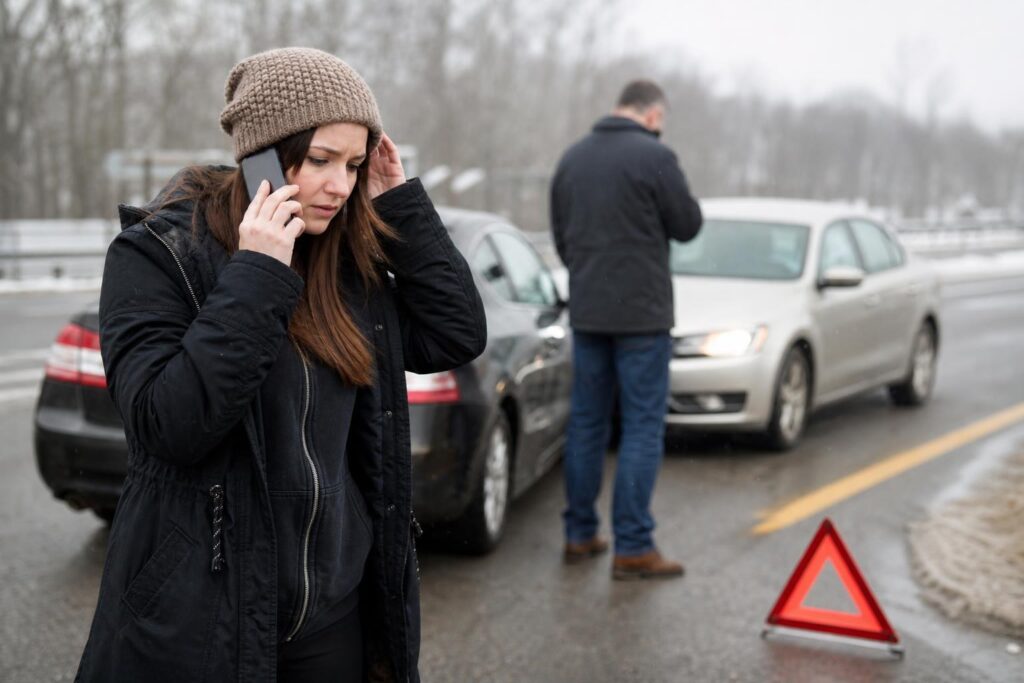
1. Move to safety and check for injuries
Take a moment to assess the scene. If anyone is injured, call 911 and request emergency medical assistance. Do not attempt to move someone who may have a serious neck, back, or head injury unless remaining in place creates an immediate danger.
If the vehicles can be moved safely and the roadway is creating a risk of another crash, move to a safer location nearby. Turn on your hazard lights if possible. Stay alert for traffic, leaking fuel, broken glass, fire, or other hazards.
Some injuries are not obvious immediately after a collision. Adrenaline can make it difficult to recognize pain, and symptoms involving the neck, back, head, or soft tissue may appear later. If you feel pain, dizziness, confusion, numbness, weakness, or another concerning symptom, tell the responding officers and seek medical attention. If symptoms appear after you leave the scene, contact a medical provider promptly rather than assuming they will resolve on their own.
For additional information about delayed symptoms, see What If Your Car Accident Injuries Show Up Days Later in Ohio?.
2. Call 911 and report the crash
Call 911 when a person is injured, a vehicle cannot be safely driven, property has been damaged, traffic is blocked, or the circumstances require law-enforcement assistance. Even when the collision appears minor, reporting it can create an official record and allow officers to address safety concerns at the scene.
Give the responding officer accurate information, but keep your description factual and concise. Avoid guessing about speed, distance, fault, or the extent of an injury. Do not apologize or make a statement such as “I caused the crash” simply because you are upset or trying to be polite. The facts may not be clear until the scene, vehicle damage, witness accounts, and other evidence are reviewed.
Ask how to obtain the crash report or report number. Keep that information with your insurance records. The report may be useful during an insurance claim, although it is only one piece of evidence and may not resolve every question about what happened.
3. Exchange information, but do not argue about fault
Obtain the other driver’s:
- Full name and contact information
- Driver’s license information
- Insurance company and policy information
- Vehicle make, model, color, and license plate number
If another person owns the vehicle, ask for the owner’s information as well. Do not threaten, confront, or argue with the other driver. Keep the conversation focused on exchanging information and obtaining medical help.
If the other driver refuses to provide information, appears impaired, leaves the scene, or becomes aggressive, tell the police. Do not follow a driver who leaves. Try to remember or safely record identifying details, including the vehicle description and direction of travel.
4. Document the accident scene
Photos and video can preserve conditions that may change soon after a collision. If you can do so safely, photograph or record:
- The position of the vehicles before they are moved
- Damage to every involved vehicle
- Your injuries, including visible bruising, swelling, or cuts
- Traffic signals, signs, lane markings, and nearby intersections
- Road conditions, debris, skid marks, potholes, or obstructions
- Weather, lighting, and visibility conditions
- Nearby businesses or homes that may have surveillance cameras
Take wide photographs showing the overall scene as well as closer images of damage and roadway conditions. Do not put yourself in danger to obtain a photograph. If you cannot document the scene personally, ask a passenger or another safe person to help.
Write down what you remember as soon as reasonably possible. Include the approximate time, location, direction of travel, traffic conditions, what you saw before impact, and what happened afterward. Memories can become less precise, especially after a frightening event.
5. Identify witnesses
Witnesses may have information that is not available from the drivers alone. If someone saw the crash, ask for the person’s name and contact information. Do not pressure a witness to take sides or tell the person what to say. Simply record the witness’s information and, if the witness volunteers a description, write down the statement as accurately as you can.
Look for possible video sources, including traffic cameras, nearby stores, dash cameras, and residential security systems. Video may be overwritten or deleted after a limited period. Tell your lawyer about potential footage as soon as possible so the appropriate steps can be considered.
6. Get medical care and follow the treatment plan
Medical care is important even when an injury does not seem severe. A healthcare provider can evaluate your condition, identify injuries, and recommend treatment. Follow the provider’s instructions and attend scheduled appointments. Tell the provider that the symptoms followed a car accident and describe when they began.
Keep copies of medical records, bills, prescriptions, referrals, discharge instructions, and mileage or transportation information related to treatment. Keep a simple journal describing pain, sleep disruption, limitations, missed activities, and changes in your ability to work or care for yourself. These records can help show how the collision affected your daily life.
Do not stop treatment solely because you are worried about cost or because the initial pain improves. Instead, discuss billing and payment questions with your medical provider, insurer, or attorney. Information about accident-related medical expenses is also available in Medical Bills After a Car Accident in Ohio.
7. Notify your insurance company carefully
Review your policy and notify your insurer about the crash within the time required by the policy. Provide basic facts about when and where the accident occurred, the vehicles involved, and whether anyone sought medical attention. Be truthful and cooperate with reasonable claim-related requests.
Insurance companies may ask for a recorded statement, access to medical information, photographs, or an inspection of the vehicle. Before agreeing to a recorded statement or signing a broad medical authorization, consider speaking with an attorney. You should understand what information is being requested and how it may be used.
The other driver’s insurance company may contact you directly. You are not required to manage that conversation on the spot. Be polite, avoid speculation, and do not minimize your injuries. You can state that you need time to understand the request and will respond after obtaining appropriate guidance.
The Ohio Department of Insurance provides general information for insurance consumers. Policy language and the facts of a particular crash still matter, so general insurance information cannot answer every claim question.
8. Preserve evidence and avoid common mistakes
Keep the damaged vehicle in substantially the same condition until it has been photographed and inspected, unless repairs are necessary for safety or required by a lender or insurer. Save estimates, repair invoices, towing bills, rental-car records, and receipts for other accident-related expenses.
Do not discard damaged personal property before documenting it. Preserve photographs, text messages, emails, claim letters, and voicemail messages related to the crash. Create a folder—digital or physical—for all accident records.
Use care on social media. Posts, photographs, check-ins, and comments about the accident, your activities, or your recovery may be taken out of context. Avoid discussing who was at fault, how much your claim may be worth, or the details of settlement discussions online. Do not alter or delete potentially relevant material without first asking your attorney how to preserve your records appropriately.
9. Be cautious with an early settlement offer
An insurer may make an offer before you know the full extent of your injuries, treatment needs, lost income, vehicle damage, or other losses. An early offer may come with paperwork that asks you to release claims. Do not sign a release or accept a settlement simply because you are under financial pressure or unsure what the document means.
Before evaluating an offer, gather available medical information and understand the claims and expenses that may be involved. A settlement decision is important because a signed release may limit your ability to seek additional payment for the same accident. Read more about this issue in Ohio Settlement Offer After an Accident.
10. Consider speaking with a car accident attorney
Not every collision requires a lawyer. Legal guidance may be especially helpful when someone suffered significant injuries, fault is disputed, multiple vehicles are involved, an insurance company denies the claim, the available coverage is unclear, or the insurer requests a recorded statement or broad authorization.
An attorney can help organize evidence, communicate with insurers, evaluate the issues raised by the claim, and explain available options. A consultation does not require you to file a lawsuit or accept representation. It gives you an opportunity to discuss the situation and understand the next steps.
Time can matter in an Ohio injury claim. Potential claims may be affected by deadlines, notice requirements, insurance provisions, evidence that becomes harder to locate, and other facts specific to the accident. Do not wait until a deadline is close to seek information about your rights.
What to remember after an Ohio car accident
Focus first on safety and medical care. Report the crash, exchange information, document the scene, identify witnesses, notify your insurer, and preserve your records. Avoid arguing about fault, guessing about injuries, posting about the collision, or signing documents you do not understand.
Slagle & Kotnik represents injured people and families in Massillon, Canton, Stark County, and surrounding Ohio communities. To discuss your accident and the options that may be available, contact the firm for a free consultation. Learn more about our car crash representation, call 330-832-9833, or contact Slagle & Kotnik online.