
A dog bite can happen in seconds. You may be walking through a Massillon neighborhood, visiting a friend in Canton, delivering a package, or helping a family member when a dog suddenly attacks. The shock can make it difficult to know what to do next.
Your first priorities are medical care and safety. After that, careful documentation can help preserve important information about the attack, your injuries, and the losses that follow. If you were bitten in Massillon, Canton, Stark County, or another Ohio community, the circumstances may also raise questions about the dog owner’s responsibility and insurance coverage.
This article explains practical steps to take after a dog bite. It is general information, not legal advice for a specific situation. For additional information about dog bite representation, visit Slagle & Kotnik’s Ohio dog bite practice area.
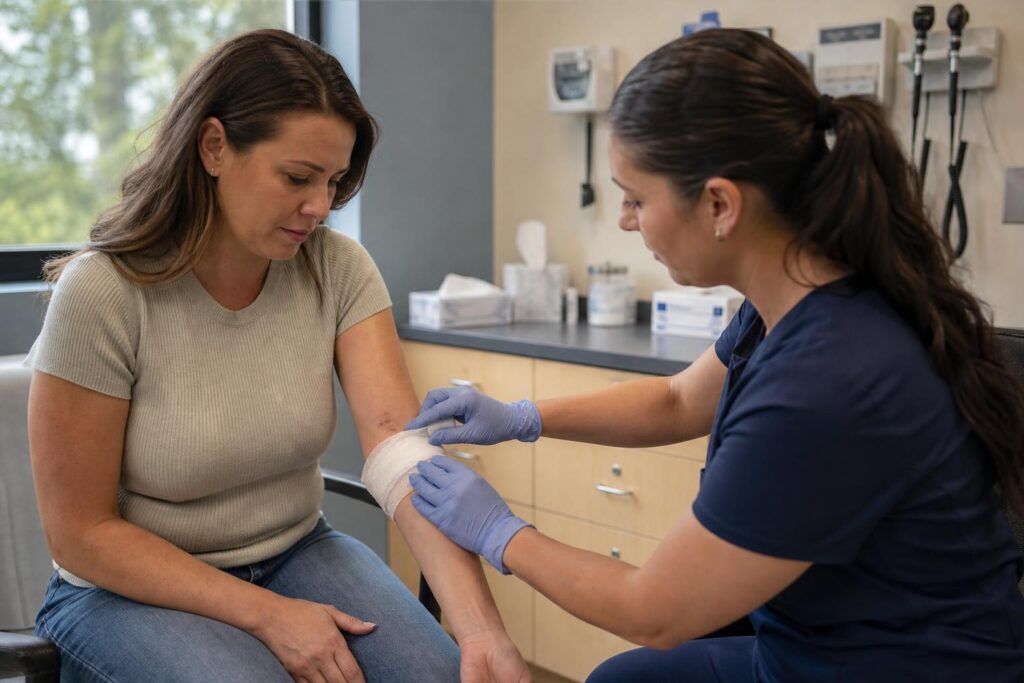
1. Get medical care as soon as possible
Seek prompt medical attention, even if the wound initially appears minor. A bite can puncture the skin, damage muscle or nerves, crush tissue, or become infected. Treatment may involve cleaning the wound, stitches, antibiotics, a tetanus shot, or follow-up care. A serious attack may require surgery or treatment from a specialist.
Tell the medical provider that a dog caused the injury and provide an accurate account of what happened. Follow the treatment instructions you receive. Keep discharge papers, prescriptions, medical bills, and information about future appointments.
Medical care protects your health and creates a record of the injury. Delaying treatment can allow an infection or other complication to worsen. It can also give an insurance company an argument that the injury was not as serious as you report.
2. Report the bite to the appropriate authority
Report the attack to the appropriate local authority. Depending on where the bite occurred, that may include the local health department, animal control, or police department. A medical provider may also have reporting obligations.
An official report can help document the date and location of the attack, identify the dog and its owner, and record whether the dog was quarantined or its vaccination information was reviewed. Ask how to obtain a copy of the report or how to provide additional information later.
Reporting is especially important when the dog was loose, the owner is unknown, the dog appeared aggressive, or a child was injured. Do not attempt to capture or restrain an unfamiliar dog yourself.
3. Identify the dog and owner
If it is safe to do so, obtain the dog owner’s name, address, telephone number, and insurance information. Ask about the dog’s vaccination records and provide that information to the medical provider and reporting authority.
The dog may belong to a neighbor, relative, friend, landlord, or business. The owner may not be present when the attack occurs. If another person was caring for the dog, write down that person’s information too.
Do not argue with the owner or make accusations at the scene. If the owner refuses to cooperate, record what you know, save any messages or other communications, and tell the investigating authority and your attorney.
4. Document the scene, injury, and damage
Take photographs as soon as possible, if your condition allows. Photograph the wound from more than one angle, then continue documenting changes during treatment and healing. Images may show swelling, bruising, stitches, bandages, infection, scarring, or restricted movement.
Photograph the location of the attack and any conditions that may help explain what happened, such as an open gate, broken fence, posted warning, or place where the dog was loose. Preserve torn or blood-stained clothing rather than throwing it away. Keep receipts for medical supplies, transportation, or other expenses related to the injury.
Write down what you remember while the details are fresh. Include the time, location, people present, what the dog did, what the owner said, and how you responded. Your account may become harder to reconstruct as days and weeks pass.
Evidence is often easier to preserve early. Slagle & Kotnik also explains the importance of documentation in its article about evidence that can help an Ohio personal injury claim.
5. Collect witness information
Witnesses may have seen the dog running loose, observed the bite, heard the owner make a statement, or know whether the dog had shown aggressive behavior. Ask for names, telephone numbers, and email addresses if possible.
Do not pressure a witness to take sides or prepare a statement for the witness to sign. Simply preserve the person’s contact information and a short description of what the witness observed. Nearby businesses or homes may also have security-camera footage. Ask about possible video promptly because recordings may not be kept indefinitely.
6. Be careful with insurance communications
A homeowners or renters insurance company may contact you after the attack. An adjuster may ask for a recorded statement, medical authorization, photographs, or a description of your symptoms. The adjuster’s job is to evaluate the claim for the insurer, not to provide legal advice or protect your interests.
Answer basic questions truthfully, but do not guess, minimize your injuries, or speculate about facts you do not know. Before giving a recorded statement, signing a broad medical authorization, or accepting a settlement, consider speaking with a dog bite attorney. A settlement may resolve the claim and affect your ability to seek additional payment for later treatment or complications.
Keep copies of letters, emails, claim numbers, and other communications. Do not post photographs or detailed comments about the attack on social media while the matter is being reviewed.
How Ohio dog bite claims may work
Ohio’s dog-bite law can make an owner or keeper responsible for injury, death, or property damage caused by the dog, subject to statutory exceptions. The Ohio Revised Code contains the provisions governing dog ownership and liability, including circumstances involving trespass, teasing, tormenting, or abusing the dog. You can review the Ohio Revised Code through the state’s official website.
The legal analysis depends on the facts. Questions may include where the attack occurred, whether the injured person had permission to be there, what the dog was doing, whether someone provoked or mishandled the dog, and whether another person or entity may share responsibility. A warning sign or claim that the dog was friendly does not by itself answer every legal question.
Insurance companies may also investigate coverage, policy exclusions, the identity of the insured, and the extent of the damages. A lawyer can help gather records and assess how the facts fit Ohio law without relying only on the owner’s or insurer’s version of events.
What losses may be part of a claim?
The losses available in a dog bite case depend on the injury and the facts. Potential categories may include:
- Emergency care, physician visits, medication, stitches, surgery, and other medical treatment;
- Future medical care, rehabilitation, or treatment for infection, nerve damage, or scarring;
- Lost wages or other income connected to time away from work;
- Physical pain, inconvenience, and limitations caused by the injury;
- Visible scars or disfigurement; and
- Emotional distress, fear, or other effects supported by the circumstances and evidence.
A child may experience particular difficulty after an attack. A child may need treatment for a physical injury while also coping with fear of dogs, anxiety, or a visible scar. A parent should keep records of medical visits, school absences, changes in activities, and other effects without coaching the child to exaggerate symptoms.
Damages are not determined by the size of the wound alone. A small puncture can cause infection or nerve problems, while a larger injury may require extensive treatment and leave permanent scarring. The medical course and lasting impact matter.
Common mistakes after a dog bite
Several choices can make a claim harder to evaluate:
- Waiting to obtain medical care or failing to follow treatment instructions;
- Failing to report the attack or identify the dog;
- Throwing away damaged clothing or other physical evidence;
- Giving inconsistent or speculative answers to an insurer;
- Accepting a payment before understanding the full medical consequences; and
- Discussing the incident publicly or posting photographs that an insurer could misinterpret.
These issues do not automatically defeat a claim. They can create disputes about what happened, how serious the injury was, and what losses were caused by the bite. Accurate records and early guidance can help reduce unnecessary confusion.
When should you contact a dog bite attorney?
Consider contacting an attorney if the bite required medical treatment, caused scarring or infection, resulted in missed work, affected a child, or produced continuing pain or emotional distress. Legal guidance may also be useful if the dog owner denies responsibility, refuses to provide information, blames you for the attack, or if an insurance company requests a recorded statement or offers a settlement.
An attorney may investigate the scene, identify witnesses, review the incident report, obtain medical records, communicate with the insurer, and evaluate the losses supported by the evidence. The sooner you seek advice, the more likely important records and recollections can be preserved. A consultation does not guarantee that a claim will succeed or that a particular amount will be recovered.
Dog bite checklist
- Move to a safe location and seek medical care.
- Report the bite to the appropriate local authority.
- Obtain the owner’s information and the dog’s vaccination details if possible.
- Photograph the injury, damaged clothing, and attack location.
- Save medical records, bills, prescriptions, and proof of lost work.
- Collect witness contact information and ask about available video.
- Keep communications from the insurance company.
- Speak with an attorney before giving a recorded statement or accepting a settlement.
Talk with Slagle & Kotnik after a dog bite
A dog bite can affect your health, work, finances, and sense of safety. If you or your child was injured in Massillon, Canton, Stark County, or a surrounding Ohio community, Slagle & Kotnik can review what happened and explain the options that may be available. The firm represents injured people and families in personal injury matters.
Contact Slagle & Kotnik for a free consultation. Call 330-832-9833 or visit the firm’s contact page.
Talk With Slagle & Kotnik
If you have questions about an Ohio dog bite injury, contact Slagle & Kotnik in Massillon to discuss the situation and the options that may be available.
Learn more about our Dog Bite representation.