
Losing a family member because of another person’s negligence can leave a family facing grief, financial uncertainty, and difficult legal questions all at once. When a death results from a wrongful act, neglect, or default that could have supported a personal injury claim if the person had survived, Ohio law may allow a wrongful death action.
One of the first questions families often ask is, “Who can file?” The answer is not always as simple as identifying the closest relative. Ohio wrongful death claims are generally brought by the personal representative of the deceased person’s estate for the benefit of qualifying surviving family members. Understanding that distinction can help families take the proper steps without overlooking important deadlines or evidence.
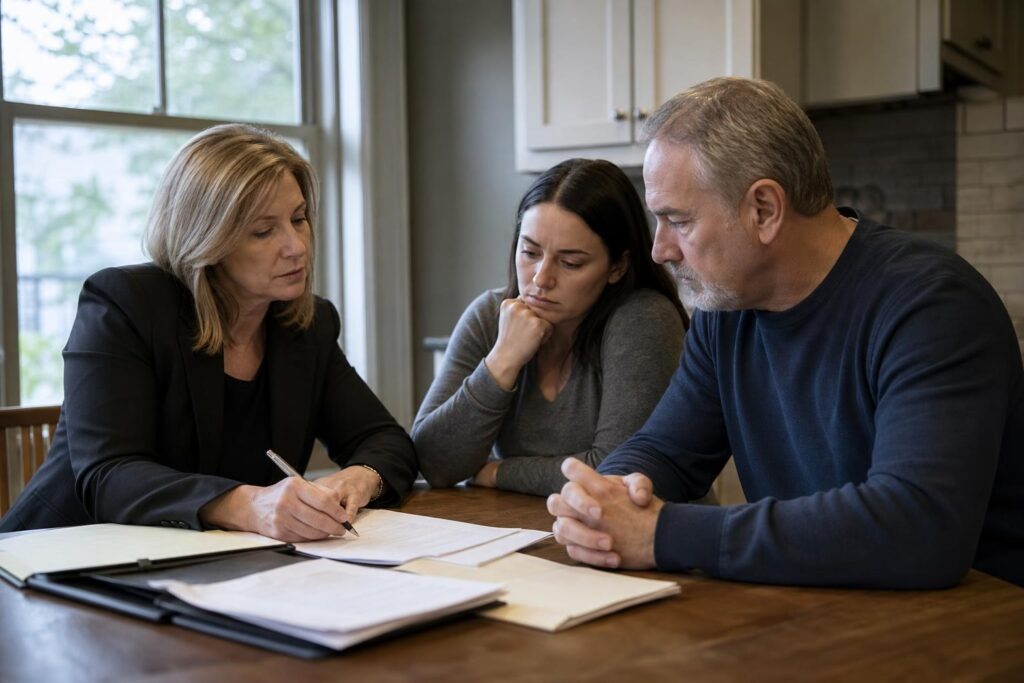
Who brings a wrongful death claim in Ohio?
Under Ohio law, the personal representative of the deceased person’s estate generally brings the wrongful death lawsuit. The personal representative may be an executor or administrator appointed through the probate process. This person files the claim on behalf of the beneficiaries rather than pursuing the action solely in an individual capacity.
The personal representative is not necessarily the only person who suffered a loss, and the representative does not automatically receive the entire recovery. The claim is brought for the benefit of the surviving spouse, children, parents, and other next of kin who may qualify under the circumstances. The applicable family relationships, estate proceedings, and facts surrounding the death can affect how the claim proceeds.
Ohio’s wrongful death provisions are found in the Ohio Revised Code. A family member should not assume that being named in a will, holding power of attorney, or being the closest relative automatically gives that person authority to file a wrongful death lawsuit. Authority to bring the claim and the right to benefit from the claim are related but distinct issues.
Who may benefit from the claim?
Qualifying beneficiaries commonly include:
- The surviving spouse
- Children, including situations involving more than one child or different family households
- Parents of the deceased person
- Other next of kin when the circumstances and applicable law provide for their participation
Not every family situation fits neatly into a short list. Whether someone may benefit can depend on which relatives survived, the deceased person’s family relationships, and other legal and factual questions. A beneficiary may also have a different type or amount of loss than another beneficiary.
Family disagreements can make these cases more difficult. Relatives may disagree about who should serve as personal representative, whether a settlement should be accepted, or how damages should be allocated. Those issues may require coordination with the probate process and careful review of the applicable Ohio law.
What situations can lead to a wrongful death case?
A wrongful death claim may arise from many types of fatal incidents, including:
- Car accidents
- Truck and commercial vehicle crashes
- Motorcycle accidents
- Dangerous property conditions
- Nursing home neglect or abuse
- Defective or dangerous products
- Medical or other professional negligence, when the facts support a claim
- Other negligent or wrongful conduct
The fact that a death occurred after an accident does not, by itself, establish legal responsibility. A claim usually requires an investigation into what happened, who owed a legal duty, whether that duty was breached, and whether the breach caused the death and legally recognized losses.
The evidence may look different depending on the incident. A fatal traffic crash may require an examination of the scene, vehicles, witness accounts, photographs, video, and available electronic data. A nursing home case may involve medical records, care plans, staffing information, facility reports, and communications with family members. Families dealing with a facility-related concern can review our information about signs of nursing home neglect in Ohio.
What damages may be available?
Ohio wrongful death damages are intended to address losses suffered by surviving beneficiaries and expenses associated with the death. Depending on the facts, potentially recoverable damages may include:
- Loss of financial support the deceased person would have provided
- Loss of services, care, assistance, advice, or protection
- Loss of companionship and society
- Loss of prospective inheritance
- Mental anguish suffered by eligible family members
- Reasonable funeral and burial expenses
The value of these losses cannot be determined from a simple formula. Important considerations may include the deceased person’s age, health, income, work history, expected retirement, household contributions, family relationships, and the beneficiaries’ circumstances. The person’s role in caring for children or supporting other family members may also be relevant.
Financial losses often require records and analysis. Pay statements, tax records, employment information, benefits documents, household budgets, and other evidence may help show the support or services the family lost. Nonfinancial losses are real as well, but they must be evaluated under the legal standards that apply to the claim.
Does the estate have a separate claim?
A wrongful death claim and a survival claim are not always the same. A wrongful death claim generally addresses losses suffered by surviving beneficiaries because of the death. A survival claim may involve the deceased person’s own legal claims for injuries, pain, medical expenses, lost earnings, or other losses experienced before death.
Whether a survival claim exists depends on what happened and how long the person lived after the injury. The estate may also have claims involving final medical expenses or other damages, depending on the circumstances. These claims can involve different legal rules, damages, and beneficiaries, so they should be evaluated separately rather than treated as one interchangeable claim.
How long does a family have to file?
Ohio’s general wrongful death statute ordinarily requires an action to be commenced within two years after the person’s death. Other facts, claims, parties, and legal rules may affect the analysis. A family should not assume that the general period applies identically to every related claim.
Waiting can create practical problems even when a filing deadline has not arrived. Witnesses’ memories may fade, video may be overwritten, vehicles or other evidence may be repaired or discarded, and records may become harder to obtain. Insurance companies, employers, facilities, and other potentially responsible parties may begin their own investigations soon after a fatal incident.
For those reasons, a family should consider seeking legal information promptly. A lawyer can review the date of death, the possible responsible parties, the estate’s status, and the deadlines that may apply to the claims under consideration.
What evidence may be important?
A wrongful death investigation may involve:
- Police, incident, or accident reports
- Photographs, surveillance video, and recordings
- Statements from witnesses and people who knew the deceased person
- Medical records and bills
- Vehicle, maintenance, inspection, or product information
- Electronic data from vehicles, phones, or other systems
- Employment, income, benefits, and tax records
- Funeral and burial expenses
- Insurance policies and communications
- Expert analysis when the facts require it
Families should preserve messages, photographs, correspondence, documents, and other information connected to the death. They should also be cautious about posting details on social media or providing recorded statements before understanding what is being requested. An insurer’s questions may be part of its investigation, but the family is entitled to consider how to protect its interests before responding.
What should family members do after a fatal incident?
There is no single checklist that fits every death, but several practical steps may help:
- Obtain and preserve available records. Keep accident reports, medical documents, photographs, bills, correspondence, and other records in one place.
- Identify potential witnesses. Write down names and contact information while the details are still fresh.
- Avoid discarding or altering evidence. Keep relevant clothing, equipment, vehicle information, photographs, and electronic records when they may relate to the incident.
- Refer insurance communications for review. Do not assume that an early settlement offer reflects the full value of the family’s losses.
- Address the estate process. Determine whether a personal representative has been appointed and whether additional probate steps are needed.
- Get advice about deadlines. The two-year general wrongful death period does not eliminate the need to evaluate other claims and possible exceptions.
These steps are not substitutes for legal advice about a particular situation. Families should focus first on their immediate needs and preserve what they can without placing additional burdens on themselves.
Why the personal representative and beneficiaries should be identified early
The identity of the personal representative affects how the claim is filed, investigated, negotiated, and, if necessary, litigated. Identifying the beneficiaries early also helps counsel understand the full range of claimed losses and communicate with the people whose interests may be affected.
Those questions can become complicated when relatives live in different states, when the deceased person was separated from a spouse, when minor children are involved, or when there is disagreement among family members. A written will may be relevant to estate administration, but it does not by itself answer every question about who may benefit from a wrongful death claim. The facts and applicable Ohio law must be reviewed together.
Talk with an Ohio wrongful death attorney
No lawsuit can undo the loss of a family member. A wrongful death claim may provide a legal process for investigating what happened, identifying responsible parties, and pursuing compensation for losses recognized under Ohio law.
Slagle & Kotnik represents families in Massillon, Canton, Stark County, and surrounding Ohio communities. Our wrongful death attorneys can review the circumstances, explain the role of the personal representative and beneficiaries, and discuss the legal options that may be available. This information is general and is not a substitute for advice about your family’s specific situation.
Contact Slagle & Kotnik for a free consultation. Call 330-832-9833 or contact the firm online.
Talk With Slagle & Kotnik
If your family has lost someone because of a fatal accident, neglect, or other potentially wrongful conduct, contact Slagle & Kotnik in Massillon to discuss the situation and the options that may be available.