
If you were injured in Massillon, Canton, or elsewhere in Stark County, one of your first questions may be: How long will my personal injury case take?
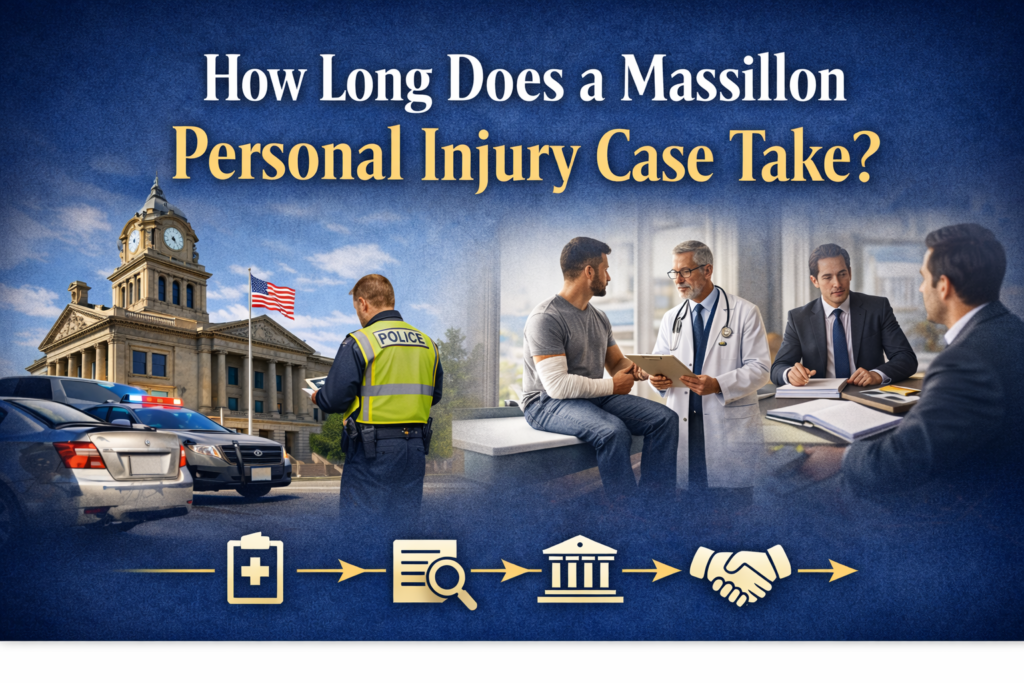
There is no single timeline for every Ohio injury claim. A case involving minor injuries and clear responsibility may resolve after several months. A claim involving serious injuries, disputed fault, multiple insurance policies, or a lawsuit may take a year or longer. The length of the process depends less on a fixed calendar and more on the medical, factual, and legal issues involved.
Understanding the usual stages can make the process easier to follow. It can also help you recognize why moving too quickly may create problems, while waiting too long to address a claim can put important rights at risk.
1. Medical care and recovery
Your health is the starting point. After an accident, seek appropriate medical attention and follow the treatment plan provided by your healthcare professionals. Medical records help document what happened to you, but treatment should never be pursued merely to build a claim.
Some injuries improve within weeks. Others, including fractures, back injuries, traumatic brain injuries, and other serious conditions, may require continuing care. It may take time to determine whether symptoms are temporary, whether additional treatment is needed, and how an injury affects work and ordinary activities.
An attorney may need a clearer medical picture before evaluating the claim or making a settlement demand. That does not mean every case must be completely finished before a lawyer can begin working. Investigation, evidence preservation, insurance communications, and other early steps may begin while treatment continues.
2. Investigation and evidence gathering
A personal injury claim usually requires more than a description of the accident. The case may involve accident reports, photographs, video, witness information, medical records, medical bills, employment records, and evidence showing who may be responsible.
The investigation may also examine whether another person or business shares responsibility, whether an insurance policy applies, and whether the other side disputes the facts. In a Massillon or Stark County case, available evidence may include a local crash report, property records, incident reports, or statements from people who saw what occurred.
Gathering this material can take time. Records may arrive at different times, and some evidence may need to be requested from third parties. You can help by preserving photographs, correspondence from insurers, bills, wage information, and a basic record of appointments and symptoms.
For more information about documentation, see what evidence can help a personal injury claim in Ohio.
3. Evaluating damages and preparing the claim
Once the available evidence and medical information have been reviewed, the claim can be evaluated more fully. Potential damages may include medical expenses, lost income, and the effects of the injury on daily life. The specific issues depend on the facts of the case and the evidence supporting them.
Future medical needs can be particularly important in a serious-injury case. If the medical picture is still changing, it may be difficult to understand the full impact of the injury. A premature settlement may not account for expenses or limitations that become apparent later, and a settlement agreement may resolve the claim permanently. You should understand what a proposed release covers before signing it.
Not every case requires the same materials. A straightforward claim may involve a relatively limited set of records. A more complex case may require extensive documentation or opinions from medical, vocational, or other qualified professionals.
4. Demand and insurance negotiations
After the claim is documented, an attorney may send the insurer a demand package explaining the facts, responsibility, injuries, damages, and supporting evidence. The insurer may accept the demand, make a counteroffer, ask for additional information, or dispute some or all of the claim.
Negotiations can take weeks or months. The pace may depend on the insurer’s response, the number of issues in dispute, the amount of documentation, and whether more medical information is needed. An initial settlement offer is not automatically a fair measure of the claim. It should be reviewed carefully, along with any deadlines or release language included with it.
For a broader discussion of this issue, read what to consider after receiving an Ohio settlement offer.
How long can settlement take?
A claim that settles without a lawsuit may take several months from the accident, particularly when the injuries are limited, treatment is complete, responsibility is reasonably clear, and the parties have the necessary records. That is only a general possibility, not a promise or a deadline.
Some claims take longer because treatment continues, the insurer questions responsibility, more than one person or business may be involved, or the parties disagree about the value of the damages. A case should not be settled solely to make the process end sooner if important information is still missing.
Settlement discussions can stop at any point if the parties cannot reach an acceptable agreement. The decision whether to accept a proposal belongs to the client after considering the available information and legal advice.
What happens if a lawsuit is necessary?
If negotiations do not resolve the claim, filing a civil lawsuit may be considered. A lawsuit does not guarantee a particular result, and it generally adds time and formal requirements to the process. It may also be necessary to protect a claim when negotiations are not moving toward a resolution.
After a complaint is filed and served, the parties may exchange information through discovery. Discovery can include written questions, requests for documents, depositions, and questions about medical history, employment, the accident, and the claimed losses. The court may also address motions, scheduling issues, and other disputes before trial.
Some cases settle during litigation. Others proceed toward trial. The timeline may depend on the court’s schedule, the number of parties, the amount of discovery, expert involvement, and the complexity of the injuries and legal issues. A litigated case can take substantially longer than an uncomplicated insurance settlement.
Ohio deadlines are separate from the case timeline
The time needed to resolve a claim is not the same as the time allowed to begin one. Ohio law contains deadlines that may apply to personal injury claims, and the correct deadline can depend on the type of claim and the facts involved. Issues such as a claim against a public entity, a wrongful-death claim, or another specialized matter may involve different rules.
Do not assume that ongoing negotiations extend every legal deadline. The Ohio Revised Code is an official source of Ohio statutes, but applying a deadline to a particular claim requires reviewing the relevant facts and law. If you were injured, consider seeking legal advice promptly rather than waiting until negotiations have stalled.
Factors that can make a case take longer
- The severity of the injury: Serious injuries may require extended treatment and a clearer assessment of future needs.
- Uncertain medical information: The claim may need to remain open while doctors evaluate recovery, additional care, or lasting limitations.
- Disputed responsibility: The other side may deny fault or argue that more than one person contributed to the accident.
- Multiple parties or insurers: More participants can mean more records, communications, and disagreements about coverage and responsibility.
- Incomplete documentation: Missing medical records, bills, wage information, photographs, or witness details can slow evaluation.
- Prior or unrelated medical conditions: The parties may disagree about which symptoms or treatment are connected to the accident.
- Court involvement: Discovery, motions, expert review, and court scheduling can extend the process.
What you can do while your claim is pending
You cannot control every part of a claim, but a few practical steps may help keep the process organized:
- Attend medical appointments and follow professional treatment instructions.
- Keep copies of bills, records, work documentation, and correspondence related to the injury.
- Tell your healthcare providers about relevant symptoms and changes in your condition.
- Save photographs, video, contact information for witnesses, and other accident-related evidence.
- Be cautious about discussing the accident or your injuries on social media.
- Refer insurance-company questions to your attorney when you are represented.
- Notify your attorney about changes in treatment, work, contact information, or insurance coverage.
These steps do not guarantee a particular result. They help preserve information that may be needed to understand the claim and respond to the issues raised by the insurer or opposing party.
When should you speak with a personal injury lawyer?
You do not need to know the value of your claim or predict its timeline before asking questions. A consultation may help you understand what information should be preserved, which parties may be involved, how insurance communications should be handled, and whether a legal deadline may affect the situation.
Early advice can be especially important when injuries are serious, responsibility is disputed, an insurer has requested a recorded statement, a settlement document has been offered, or the injury affects your ability to work. You may also want to discuss the claim if an accident involved a commercial vehicle, a dangerous property condition, or the death of a family member. Slagle & Kotnik also handles related Ohio personal injury matters.
Talk with Slagle & Kotnik
A Massillon personal injury case may resolve in months, or it may require substantially more time if the injuries, evidence, insurance issues, or litigation are complicated. The goal should not be to rush a claim or delay it unnecessarily. It is to make informed decisions while protecting the claim and allowing the facts to develop.
If you were injured in Massillon, Canton, Stark County, or a surrounding Ohio community, contact Slagle & Kotnik for a free consultation. Call 330-832-9833 or contact the firm online to discuss the situation and the options that may be available. This article provides general information and is not personalized legal advice.