
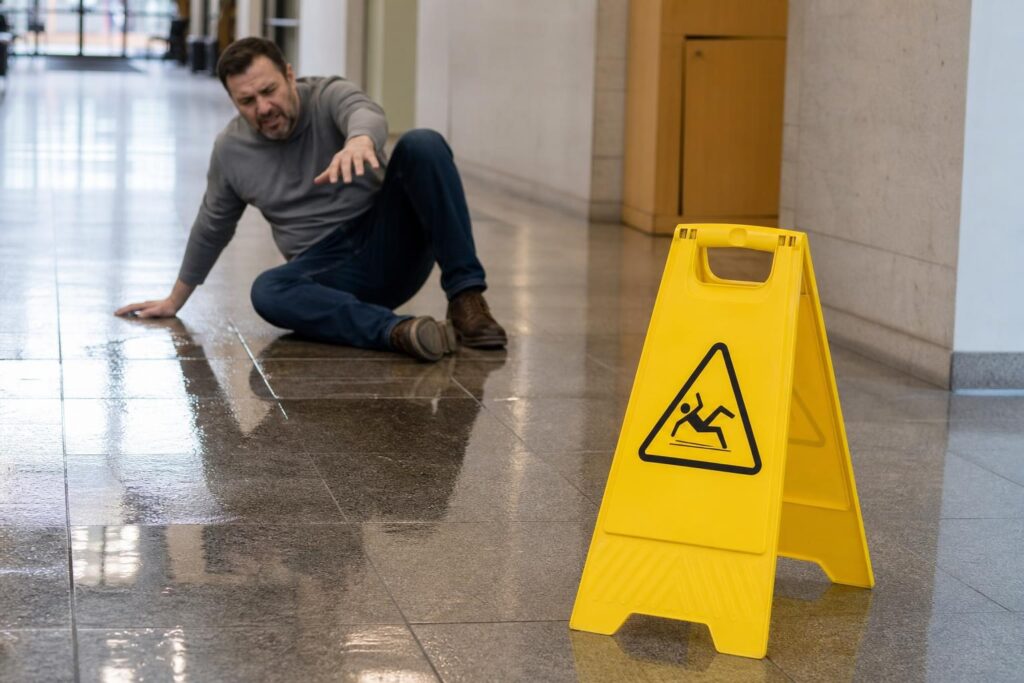
A slip and fall can happen in seconds, but the resulting injury may affect your health, work, finances, and daily life for months. When a fall occurs on someone else’s property in Massillon, Canton, Stark County, or elsewhere in Ohio, an important question is whether a dangerous condition caused the accident and whether the property owner or occupier may be legally responsible.
Liability is not automatic simply because a person fell on another party’s property. Ohio slip and fall claims generally require a careful review of the condition, the property owner’s knowledge, the injured person’s reason for being there, and what each party reasonably should have done. Photos, incident reports, witness information, medical records, and other evidence may become important in evaluating what happened.
What Must Be Shown in an Ohio Slip and Fall Claim?
A premises liability claim is generally based on negligence. In practical terms, an injured person may need to establish that:
- The property owner or occupier owed a duty of reasonable care;
- A hazardous condition existed on the property;
- The owner or occupier created the condition, knew about it, or should reasonably have discovered it;
- The condition caused the fall and resulting injuries; and
- The injuries caused legally recognizable damages.
The details matter. A wet floor in a grocery store, an uneven sidewalk, a broken stair, inadequate lighting, debris in a walkway, or ice near a business entrance may each raise different questions. The same condition may also be evaluated differently depending on how long it existed, whether it was visible, and whether the property owner had a reasonable opportunity to address it.
Ohio’s statutes are available through the Ohio Revised Code, but premises liability also involves Ohio court decisions applying negligence principles to particular circumstances.
The Property Owner’s Duty Depends on Why You Were There
Ohio law does not impose exactly the same duty toward every person on a property. The reason for a visitor’s presence can affect the analysis.
Invitees
An invitee is generally someone invited onto property for a purpose connected with the owner’s business or interests. Customers in a store are a common example. Property owners and occupiers generally must use reasonable care to maintain the premises in a reasonably safe condition and to address hazards that they know about or reasonably should discover.
That duty can include reasonable inspections, correcting dangerous conditions, warning visitors about hazards that cannot immediately be corrected, and maintaining areas open to customers or other invitees. The question is not whether the property was perfectly safe. The question is whether the owner or occupier acted reasonably under the circumstances.
Licensees and trespassers
A licensee enters with permission, but not necessarily for a business purpose connected with the property owner. A social guest may fall into this category. A trespasser enters without permission. The duties owed to these visitors can differ from the duties owed to invitees. The specific facts—including permission, notice, the condition of the property, and the visitor’s conduct—are important.
Businesses, landlords, homeowners, government entities, and other property possessors may face different factual and legal issues. Identifying the party responsible for maintaining the area where the fall occurred is often an early part of the investigation.
Notice: Who Knew About the Hazard?
Many slip and fall disputes focus on notice. A property owner may be responsible when it created the hazardous condition or had actual knowledge of it. A claim may also involve constructive knowledge if the condition existed long enough, or under circumstances such that, a reasonable inspection would have discovered it.
Consider a customer who falls on liquid near a store’s checkout area. Useful questions may include:
- What caused the liquid to be on the floor?
- How long had it been there?
- Did an employee see it or receive a report?
- Were inspections performed, and are there inspection records?
- Was there a warning sign or another reasonable precaution?
- Did the store’s policies require a particular response?
A business may dispute when the hazard appeared or whether it had a reasonable opportunity to correct it. That is why surveillance footage, employee statements, inspection logs, maintenance records, and witness accounts can be significant. Evidence can disappear quickly when video is recorded over, a condition is repaired, or witnesses leave the area.
The Open-and-Obvious Doctrine
Ohio’s open-and-obvious doctrine can affect whether a property owner owed a duty to warn about a condition. When a hazard is open and obvious, a person who encounters it may be expected to notice and avoid it. Courts examine whether the condition was objectively observable and whether circumstances made it reasonably apparent—not simply whether the injured person happened to see it.
Visibility is only part of the analysis. Distractions, poor lighting, the arrangement of merchandise, crowded conditions, the need to look elsewhere while walking, and the way a hazard blends into the surrounding surface may be relevant. A condition that appears obvious in a photograph may have been harder to identify from the visitor’s perspective at the time.
The doctrine does not mean every visible hazard defeats a claim, and it does not resolve every case at the beginning of an investigation. The location, size, color, lighting, warnings, surrounding activity, and other facts should be considered together.
Snow, Ice, and Ohio’s Natural Accumulation Rule
Winter falls often involve additional legal questions. Ohio cases commonly distinguish between natural accumulations of ice or snow and conditions created or worsened by human activity. Property owners are not automatically responsible for every fall that occurs during winter weather.
A different analysis may apply when a dangerous condition results from something such as a leaking downspout, defective drainage, negligent snow removal, or another property-related source rather than ordinary precipitation. Timing and weather records may also matter. Was the condition present during an ongoing storm? Had temperatures changed? Did water flow from a structure and freeze in a walkway? Was snow piled where it created an additional hazard?
These cases are fact-sensitive. Our guide to slip-and-fall injuries on ice and snow in Ohio discusses winter conditions in more detail.
Your Own Conduct and Comparative Negligence
An insurance company or property owner may argue that the injured person was partly responsible for the fall. Ohio’s comparative negligence rules can reduce recovery when an injured person’s conduct contributed to the injury. The amount of any reduction depends on the facts and the percentages assigned to the parties under the applicable law.
Arguments about comparative negligence may involve footwear, cellphone use, attention, familiarity with the area, route selection, warnings, or whether the person could reasonably have avoided the condition. Those allegations do not automatically establish fault. They must be evaluated in light of what a reasonable person could observe and do in the same circumstances.
Ohio’s statutory provisions concerning comparative negligence are included in the Ohio Revised Code. The way those provisions apply can depend on the facts, the parties involved, and the claims being made.
Damages After a Slip and Fall
A fall may cause a fracture, sprain, head injury, back injury, torn ligament, or other condition. Some symptoms are immediate, while others become more noticeable over the following days. Medical evaluation can help identify injuries and document the connection between the fall and the treatment received.
Potential categories of damages in an injury claim may include medical expenses, lost income, reduced ability to work, physical pain, emotional effects, and limitations on ordinary activities. The availability and value of any particular category depend on the evidence and the circumstances of the claim. Keeping medical bills, appointment records, work information, medication details, and notes about daily limitations can help preserve information for later review.
Do not assume that a claim is weak because the property owner says the condition was minor or because you initially tried to continue with your day. A medical assessment and a complete review of the facts may provide a clearer picture.
What to Do After a Slip and Fall
- Seek medical attention. Call for emergency help when appropriate, and follow medical instructions. Tell the provider that the injury resulted from a fall and describe your symptoms accurately.
- Report the incident. Notify the store manager, business owner, landlord, property manager, or other responsible person. Request that the report reflect what happened and where you fell.
- Take photographs. If it is safe to do so, photograph the hazard, surrounding area, lighting, signs, footwear, and any visible injuries. Try to preserve the condition as it appeared at the time of the incident.
- Identify witnesses. Obtain names and contact information when possible. Employees, customers, neighbors, or companions may have seen the condition or what happened immediately afterward.
- Preserve records. Keep incident reports, medical records, bills, work information, insurance correspondence, and communications with the property owner or insurer.
- Avoid guessing or minimizing. Give accurate information, but do not speculate about facts you do not know. Be cautious before signing a release or giving a recorded statement about a claim.
Evidence can be especially important when the hazardous condition is temporary. A property owner may clean, repair, or remove the condition soon after the fall. More information about documenting an injury claim is available in What Evidence Helps a Personal Injury Claim in Ohio?
How Long Do You Have to File?
Ohio law includes a statute of limitations for many personal injury claims, and the deadline may depend on the type of claim and the parties involved. A general two-year period is often associated with bodily-injury claims, but exceptions and special rules may apply. Claims involving a government entity, a minor, a deceased person, or other particular circumstances should not be evaluated using a general deadline alone.
Waiting can make a claim more difficult even before a filing deadline arrives. Witnesses may become harder to locate, surveillance footage may no longer exist, and the condition may change. If you were injured in a fall, promptly discussing the circumstances with an attorney can help identify potential deadlines and evidence issues. The Ohio Revised Code is available through the state’s official legal database.
When to Discuss a Slip and Fall With an Attorney
An attorney can help investigate who controlled the property, assess notice and visibility issues, organize evidence, review communications from an insurer, and explain the legal options that may be available. Legal representation is not a guarantee of a particular result, and every claim depends on its own facts.
Slagle & Kotnik represents injured people and families in Massillon, Canton, Stark County, and surrounding Ohio communities. Learn more about our Slip and Fall representation, or contact the firm for a consultation about your situation.
Talk With Slagle & Kotnik
If you were injured in a slip and fall, contact Slagle & Kotnik to discuss what happened, what evidence may matter, and what options may be available. This information is general and is not a substitute for advice about your specific circumstances.
Call 330-832-9833 or contact the firm online to request a free consultation.