
Summer brings more time outdoors in Massillon, Canton, and throughout Stark County. People visit pools, patios, parks, sidewalks, restaurants, and community events. Those activities can be enjoyable, but they can also create conditions that lead to a serious slip and fall.
Water, rain, uneven pavement, loose mats, clutter, and poor lighting may all contribute to a fall. Sandals or flip-flops can make it harder to maintain traction, while heat and dehydration may leave someone tired or lightheaded. A fall that looks minor at first can cause a fracture, head injury, back injury, or another condition requiring medical care.
This article explains common summer slip-and-fall hazards, steps that may help prevent an accident, and what to consider if you fall on property owned or controlled by someone else. The information is general and is not a substitute for advice about a particular situation.
Why Summer Can Create Slip-and-Fall Hazards
Summer does not automatically make a property unsafe. The circumstances matter. Outdoor areas often see heavier use during warm weather, and some activities introduce water or other hazards that may require prompt attention.
Water and wet surfaces
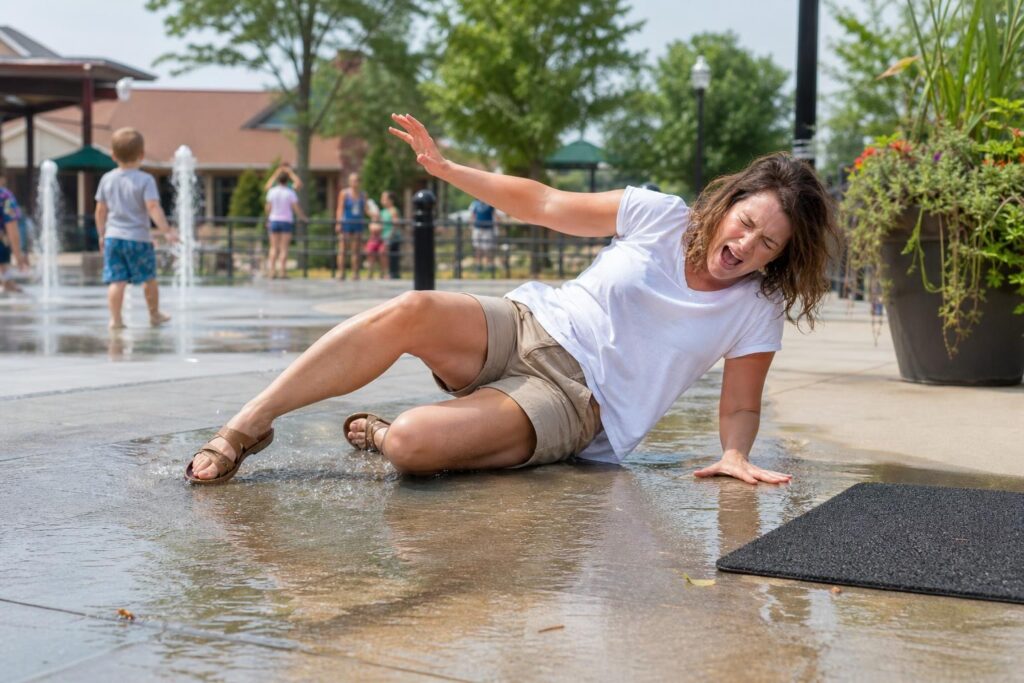
Swimming pools, splash pads, sprinklers, outdoor showers, hoses, and heavy summer rain can leave walkways and floors wet. Smooth tile, concrete, painted surfaces, and pool decks may become difficult to navigate when wet. A business or property manager may need to monitor these areas, address the condition, and provide an appropriate warning when a hazard cannot be corrected immediately.
Uneven sidewalks and outdoor surfaces
Sidewalks, driveways, patios, parking lots, and paths may develop cracks, raised sections, holes, loose gravel, or deteriorated edges. Tree roots and weather-related damage can also change the level of a walking surface. These conditions may be especially difficult to see when a person is distracted, carrying items, walking in a crowded area, or visiting after dark.
Footwear, clutter, and temporary obstacles
Flip-flops, sandals, and other footwear may not provide the same support or traction as shoes designed for walking. Footwear alone does not determine who is responsible for an accident, but it can affect how a fall occurred and how the circumstances are evaluated. Toys, hoses, cords, outdoor furniture, merchandise, boxes, and other objects can create additional tripping hazards when left in a walkway.
Heat, fatigue, and reduced attention
Hot weather may contribute to fatigue, dizziness, or difficulty concentrating. Those conditions can make it harder to notice a change in elevation or respond to a slippery surface. Taking breaks, drinking water, and moving carefully can help reduce personal risk, but property owners and businesses still need to address dangerous conditions within areas they control.
Common Injuries After a Summer Fall
A fall can affect more than the body part that first hurts. Some injuries become more apparent over the next several hours or days. Common examples include:
- Wrist, hand, arm, ankle, or leg fractures;
- Sprains, strains, and torn ligaments;
- Knee, shoulder, hip, or back injuries;
- Neck injuries;
- Concussions or other head injuries; and
- Bruising, cuts, and soft-tissue injuries.
Older adults may face particular concerns after a fall, but people of every age can be seriously injured. Children may fall while running or playing, and adults may be hurt in a store, restaurant, apartment complex, public area, or private gathering. If you hit your head, experience severe pain, feel confused or dizzy, lose consciousness, have weakness or numbness, or have another urgent symptom, seek prompt medical attention.
Practical Ways to Reduce Summer Fall Risks
Many summer hazards can be reduced through ordinary care and maintenance. Helpful precautions include:
- Wear footwear that fits securely and provides appropriate traction for the surface.
- Use extra care around pools, sprinklers, wet entrances, and recently washed floors.
- Keep hoses, cords, toys, tools, and other objects out of walking paths.
- Use handrails on stairs and avoid rushing on wet or uneven surfaces.
- Place suitable mats near entrances and pool areas, and keep them flat and secure.
- Use outdoor lighting so cracks, steps, curbs, and other changes in elevation are visible.
- Take breaks in hot weather and drink water when spending extended time outside.
- Supervise children in areas where water, uneven surfaces, or crowded activity may increase the risk of falling.
The Centers for Disease Control and Prevention offers general fall-prevention information, including guidance about safer footwear, lighting, and walking areas. You can review its resources at the CDC’s fall-prevention page.
What to Do After a Slip and Fall
Your health should come first. If you are hurt, ask someone to call emergency services or arrange medical care. Do not force yourself to stand or walk if doing so may worsen an injury. When the situation is not an emergency, consider taking these steps:
Report the fall
Tell the owner, manager, landlord, event organizer, or another responsible person what happened. Ask that the incident be documented. Try to obtain the name and contact information of the person who received the report, but do not speculate about fault or minimize your symptoms.
Get medical attention
Follow medical advice and keep records of appointments, instructions, prescriptions, and related expenses. A medical evaluation can identify injuries that are not obvious immediately after a fall. Tell the healthcare provider what happened and describe your symptoms accurately.
Preserve information about the scene
If you can do so safely, photograph or record the area where you fell. Capture the wet surface, uneven pavement, broken step, missing warning sign, lighting, surrounding conditions, and the location of any object involved. Take photographs from more than one distance and avoid altering the scene before it is documented.
Write down the date, approximate time, location, weather, what you were doing, what you noticed before and after the fall, and the names of anyone who saw it. Keep the shoes and clothing you wore in their condition from the incident. Do not post photographs, comments, or accusations about the fall on social media while the matter is being evaluated.
When a Property Owner May Be Responsible
A fall on someone else’s property does not automatically establish legal responsibility. The analysis may depend on the type of property, who controlled the area, how the hazard arose, whether the owner or business knew or should have known about it, what steps were taken to correct or warn about the condition, and how the accident occurred.
Evidence may include inspection or maintenance records, incident reports, photographs, video footage, witness statements, weather information, cleaning records, and communications with the property owner or insurer. A hazard that existed only briefly may raise different questions from a condition that was visible or present for an extended period. The location and circumstances also matter: a pool deck, store entrance, apartment walkway, public sidewalk, and private residence may involve different facts and responsible parties.
Your own actions may also be considered. That does not mean an injured person automatically loses the ability to pursue a claim. It means the facts must be examined carefully rather than reduced to a single explanation. Ohio’s statutes are available through the Ohio Revised Code, but applying the law to a specific fall requires reviewing the evidence and circumstances.
Insurance and Evidence After a Fall
A property owner’s insurer may contact you after an incident. You can provide basic facts, but be cautious about giving a recorded statement, signing a release, or accepting a payment before you understand the extent of your injuries and what the document covers. Early settlement discussions may not account for continuing treatment, missed work, or other effects of the injury.
Keep copies of medical bills, receipts, work-related records, correspondence, photographs, and any report connected with the fall. Do not assume that a business’s failure to contact you means evidence is being preserved. A lawyer may be able to help identify relevant records and communicate with an insurer while you focus on treatment.
When to Speak With a Slip-and-Fall Lawyer
Consider seeking legal guidance when the fall caused significant injuries, required emergency care or ongoing treatment, affected your ability to work, involved a disputed version of events, or occurred on property owned by a business, landlord, government entity, or another person. Prompt advice can also be useful if the dangerous condition was repaired or removed after the fall, surveillance footage may exist, or an insurer asks you to sign documents.
A lawyer can review the available information, discuss potential legal issues, help preserve evidence, and explain options without guaranteeing a particular result. You can learn more about Slagle & Kotnik’s slip-and-fall representation and how the firm may assist with an Ohio premises-liability matter.
Talk With Slagle & Kotnik
A summer slip and fall can disrupt your health, work, family responsibilities, and daily life. If you or a family member was injured on another person’s property in Massillon, Canton, Stark County, or a surrounding Ohio community, Slagle & Kotnik can discuss the situation and the options that may be available. Contact the firm for a free consultation at 330-832-9833 or contact Slagle & Kotnik online.