
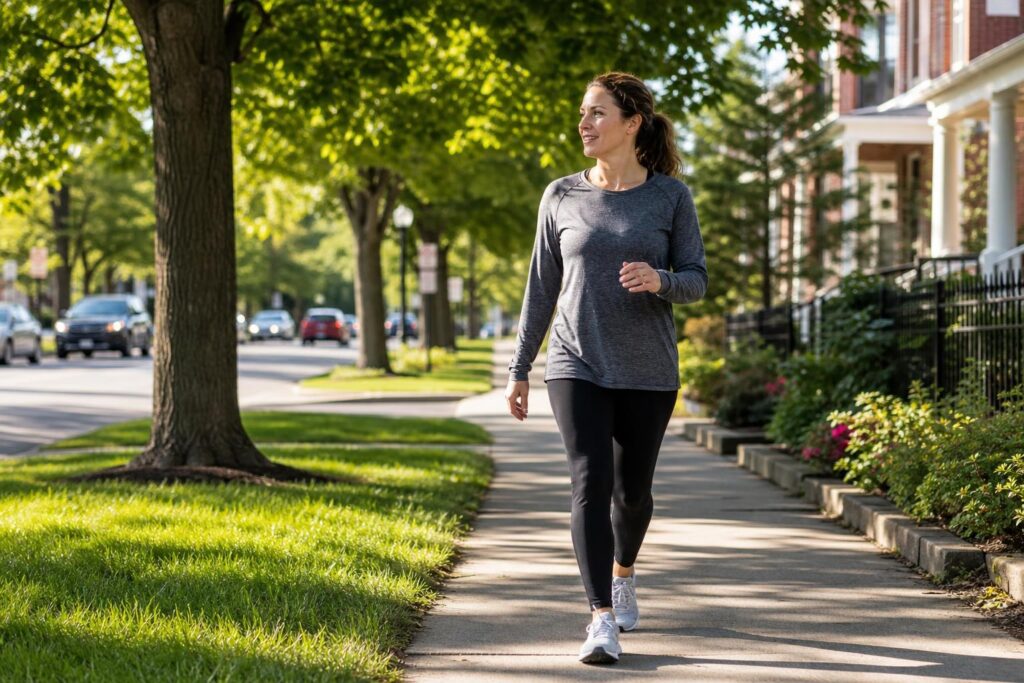
Why a 10-Minute Walk Is Worth Your Time
A daily walk does not need to be long, fast, or difficult to be worthwhile. Ten minutes may fit into a lunch break, a morning routine, or the time between finishing work and starting dinner. That small amount of movement can be an approachable way to spend less time sitting and build a more active daily routine.
Walking is also easy to adjust. You can walk indoors or outside, alone or with someone else, at a comfortable pace or with a little more speed when your body is ready. The goal is not to turn every walk into a workout. The goal is to create a habit that is realistic enough to repeat.
The Centers for Disease Control and Prevention provides general information about physical activity and its role in health. A short walk is only one part of an overall wellness routine, but it can be a practical place to begin.
Physical Benefits of a Short Daily Walk
Walking uses many of the body’s major muscle groups while placing less stress on the joints than higher-impact activities. A regular walking habit may support several aspects of physical health, especially when it is combined with adequate sleep, balanced nutrition, and other activity that is appropriate for you.
- More regular movement: A 10-minute walk interrupts long periods of sitting and adds movement to a day that might otherwise be mostly sedentary.
- Support for heart and circulatory health: Brisk walking raises the heart rate without requiring specialized equipment or a gym membership. Over time, regular physical activity can be part of a heart-healthy lifestyle.
- Muscle and joint mobility: Gentle walking moves the hips, knees, ankles, and other joints through a familiar range of motion. It may help you feel less stiff after sitting for a long period.
- Improved stamina: Starting with 10 minutes gives your body an opportunity to adjust. With consistency, some people find that longer walks or a quicker pace become more manageable.
- Potential support for blood sugar and blood pressure goals: Physical activity may be useful as part of a plan to manage certain health conditions, but it does not replace medical care or prescribed treatment.
A walk does not have to leave you exhausted to count. If you are new to exercise, recovering from an illness or injury, or managing a medical condition, a comfortable pace may be the right starting point. Ask a qualified health professional what level of activity is appropriate for your circumstances.
A Mental Reset in Ten Minutes
The value of walking is not limited to physical fitness. A brief change of surroundings can create a useful break from screens, work demands, household responsibilities, or repetitive thoughts. Paying attention to your breathing, your surroundings, and the rhythm of your steps can help make the break feel more intentional.
Some people notice a better mood after moving outside or spending time in a quiet setting. Others enjoy the sense of completion that comes from keeping a small promise to themselves. Walking may also create space to think through a problem without the constant interruptions that come with a phone or computer.
These effects are not a substitute for professional care. If you are experiencing ongoing anxiety, depression, severe stress, or another mental health concern, consider speaking with a qualified provider. A daily walk can complement care, but it should not be presented as a cure.
Walking Can Support Better Daily Habits
Small habits are often easier to maintain than ambitious plans that require a complete schedule change. A 10-minute walk can serve as an anchor for other routines. You might walk after breakfast, immediately after work, or after dinner. Connecting the walk to an activity you already do makes it easier to remember.
There is no need to wait for a perfect day or a sudden burst of motivation. Put comfortable shoes near the door, decide on a simple route, and start with a time that is convenient. If 10 minutes feels like too much on a particular day, walking for less time is still a way to keep the habit active. If you miss a day, resume when you can rather than treating the missed day as failure.
Simple ways to make the habit easier
- Choose a route that starts and ends close to home, work, or another regular destination.
- Use an indoor option, such as a hallway, shopping center, or other appropriate location, when weather or safety conditions make outdoor walking difficult.
- Keep the pace comfortable at first and increase it gradually only if that feels appropriate.
- Walk with a friend, family member, or dog when companionship helps you stay consistent.
- Listen to music or a podcast only when doing so does not distract you from traffic, other hazards, or people around you.
- Track the habit with a calendar or simple note if seeing your consistency helps you stay motivated.
A walking routine should fit your life rather than create another source of pressure. Ten minutes every day is one option; several short walks during the week may be more realistic for someone else.
Social and Emotional Benefits of Walking Together
A walk can be an easy way to spend time with another person without the distractions of a restaurant, television, or busy household. A conversation may feel more natural when you are moving side by side rather than sitting across from each other. Families can use a short walk as a regular opportunity to reconnect, and coworkers may find that a walking conversation provides a change from the usual desk setting.
Walking alone has value as well. It can offer quiet time, a chance to notice your neighborhood, or a simple break in the day. The best format is the one that makes you feel comfortable and more likely to return to the habit.
How to Walk More Safely
Even a low-impact activity deserves sensible preparation. Wear shoes that feel secure and comfortable. Choose a route with adequate lighting and, when possible, a sidewalk or other designated walking area. Stay alert around driveways, intersections, parking lots, uneven pavement, and changing weather conditions.
If you walk near traffic, face safety concerns directly: use marked crossings, follow traffic signals, and do not assume a driver has seen you. Put down the phone when you need to cross a street or navigate a busy area. Reflective clothing or a light may improve visibility in low-light conditions, but it does not eliminate the need to remain attentive.
Ohio weather can change quickly. Ice, snow, standing water, heat, and poor visibility may make a familiar route unsafe. Consider an indoor alternative instead of taking unnecessary risks. If you do walk outside in winter, choose footwear with appropriate traction and avoid areas that appear icy.
Listen to warning signs from your body
Stop and seek appropriate medical guidance if walking causes concerning symptoms such as chest pain, severe shortness of breath, fainting, or unusual pain. New or worsening pain should not be ignored simply because walking is generally considered gentle. People recovering from an injury may need a modified plan or clearance before beginning regular activity.
Walking After an Injury
A short walk can sound simple, but the right activity level depends on the person and the injury. Someone recovering from a car crash, fall, workplace incident, or other event may have pain, limited mobility, or medical restrictions. Follow the instructions provided by your healthcare professionals and avoid increasing activity just to meet a target.
It can also help to keep a record of symptoms, activity, and changes in your daily routine. That information may be useful when discussing recovery with a medical provider. If an injury happened because of another person’s conduct or a dangerous condition, preserve relevant records and consider learning more about personal injury matters handled by Slagle & Kotnik. General information cannot determine whether a particular claim exists or what steps may apply to your situation.
For related general information about maintaining positive routines, see Small Habits Lead To Big Changes and The Benefits of Walking.
Making Ten Minutes a Sustainable Routine
The most useful walking plan is one you can repeat safely. Start with a time and place that are convenient. Keep the first few walks comfortable, then evaluate how your body responds. You can remain at 10 minutes, add another short walk, or gradually extend the distance if that fits your health and schedule.
Do not measure the value of a walk only by calories, distance, or speed. A walk can also provide a break from sitting, time with a loved one, a calmer transition between activities, or a moment outdoors. Those practical benefits can make the habit easier to continue.
A 10-minute walk will not solve every health concern, and it is not a substitute for medical advice. It can, however, be a manageable first step toward more regular movement. When repeated over time and adjusted to your needs, a small daily habit may become a meaningful part of a healthier routine.
Talk With Slagle & Kotnik
If you have questions about an Ohio personal injury or other civil matter, contact Slagle & Kotnik in Massillon to discuss the situation and the options that may be available.
Learn more about the personal injury matters the firm handles.