
A dog bite can cause more than a painful wound. Even a short encounter may lead to emergency treatment, stitches, infection concerns, scarring, missed work, fear around animals, or lasting emotional distress. If you or your child has been bitten in Massillon, Canton, Stark County, or another Ohio community, taking practical steps early can help protect your health and preserve information about what happened.
Your first priority is medical care. After that, document the incident, report it to the appropriate authorities, and be cautious about discussing fault or accepting an insurance payment before you understand your options. Ohio law may allow an injured person to pursue a claim against a dog’s owner, keeper, or harborer, but the facts and available evidence matter.
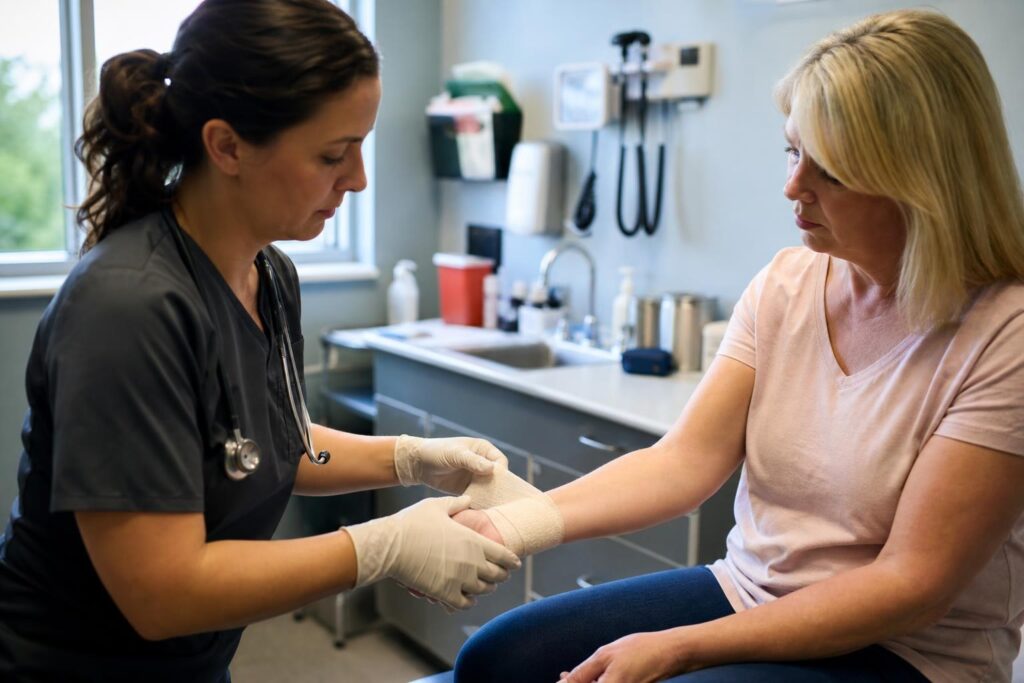
1. Get medical care as soon as possible
Wash the wound with soap and running water if you can do so safely, then seek prompt medical attention. A bite that appears small may still damage tissue or become infected. A health care professional can evaluate the wound, clean it properly, determine whether additional treatment is needed, and address concerns such as tetanus protection or possible exposure to rabies.
Follow the treatment instructions you receive. Keep appointments, take prescribed medication as directed, and tell your medical provider if pain, swelling, redness, drainage, fever, reduced movement, or other symptoms develop. If the bite affects your hand, face, eye, joint, or another sensitive area, prompt evaluation is particularly important.
Medical records also create an objective record of the injury. Keep discharge paperwork, prescriptions, bills, photographs, and instructions from every provider. If you miss work, keep information showing the dates and hours missed. Do not delay necessary treatment simply because you are uncertain about payment or insurance.
2. Make sure the incident is reported
Contact the appropriate local animal-control agency, health department, or law-enforcement agency to report the bite. The correct reporting process may depend on where the incident occurred. Medical providers may also have reporting responsibilities.
Reporting serves a public-safety purpose. Officials may need to locate the dog, confirm vaccination information, investigate the circumstances, and determine whether observation or other public-health measures are appropriate. Ask how to obtain a report number or a copy of any report that is available.
Do not put yourself at risk trying to capture or restrain a dog. If the animal is still loose or appears dangerous, move to a safe location and contact authorities.
3. Identify the dog, owner, and witnesses
Obtain the dog owner’s name and contact information if it is safe to do so. Ask for the dog’s vaccination information, including rabies documentation. If another person was caring for or controlling the dog, record that person’s information as well.
Write down what you remember while the details are fresh. Include:
- The date, approximate time, and location of the bite
- What happened immediately before the dog approached or attacked
- Whether the dog was leashed, behind a fence, or otherwise restrained
- What the owner, handler, or witnesses said
- How the dog looked and behaved before, during, and after the incident
- The names and contact information of people who saw the incident or its aftermath
Do not assume that a witness will remember the details later. Ask witnesses for their contact information, but avoid pressuring them to characterize fault or coordinate their accounts. A factual record is more useful than speculation.
4. Photograph the injury and preserve other evidence
Take clear photographs of the wound as soon as possible and continue documenting it during healing. Use consistent lighting and, when appropriate, include an object that helps show scale. Photograph bruising, swelling, stitches, bandages, scarring, torn clothing, and the surrounding location.
Preserve the clothing and shoes worn during the incident rather than washing, repairing, or discarding them. Save photographs, text messages, emails, social-media messages, medical records, bills, and correspondence with the dog owner or an insurer. Keep a simple journal describing pain, sleep disruption, changes in daily activities, medical appointments, and emotional effects.
Other evidence may include security-camera footage, doorbell-camera recordings, photographs of a broken gate or other property condition, and records showing prior complaints or incidents. Video can be overwritten quickly, so identify potential sources and request that relevant footage be preserved.
For more information about documenting an injury claim, see What Evidence Helps a Personal Injury Claim in Ohio?
5. Understand the basics of Ohio dog-bite liability
Ohio’s dog-bite statute generally addresses injuries caused by a dog and may impose liability on the owner, keeper, or harborer for certain injuries. The statute also contains exceptions and limitations. Issues can include whether the injured person was trespassing, was committing or attempting to commit a criminal offense, or was teasing, tormenting, or abusing the dog. The specific facts are important.
This means that a dog-bite claim should not be evaluated solely by asking whether the dog had bitten someone before. Evidence about the location, the dog’s control, the interaction, the owner’s knowledge, and the injured person’s conduct may all matter. Other legal theories or claims may also be relevant depending on the circumstances.
You can review Ohio’s statutes through the Ohio Revised Code. The statute is general information, not a determination of how it applies to a particular incident. A lawyer can review the facts, identify potentially responsible parties, and explain what evidence may be needed.
6. Be careful when speaking with the dog owner or an insurer
It is reasonable to exchange contact and insurance information after an incident. Keep later communications factual and limited. Do not argue with the owner, threaten anyone, post accusations online, or speculate about who was at fault. A statement made while you are frightened or in pain may be misunderstood or taken out of context.
An insurer may ask for a recorded statement, medical authorization, photographs, or a release. You do not have to decide immediately. Read documents carefully and consider obtaining legal advice before signing a release or accepting a settlement. A payment may affect your ability to pursue additional amounts if medical problems, scarring, or other consequences become clearer later.
Do not post photographs, videos, or detailed accounts of the incident on social media. Online posts can be copied and presented without the surrounding context. Keep communications with the insurer and other involved parties organized, and save copies of anything you send or receive.
7. Track the ways the bite affects your life
A dog-bite claim may involve more than the initial emergency-room bill. Depending on the facts, documented losses may include follow-up care, medication, rehabilitation, travel to medical appointments, missed work, and other injury-related expenses. Physical pain, scarring, anxiety, fear of dogs, and interference with ordinary activities may also be relevant to a claim.
Keep records rather than relying on memory. Save pay stubs or employer information related to missed work, receipts for out-of-pocket expenses, and appointment calendars. Tell your health care providers about ongoing symptoms and follow their recommendations. If the bite affects a child’s school attendance, activities, sleep, or behavior, keep a factual record and share those concerns with the child’s medical provider.
When should you contact a dog-bite attorney?
You may want to speak with a lawyer if the injury required significant treatment, caused scarring or loss of movement, affected your work, involved a child, resulted in continuing emotional distress, or led to a dispute about what happened. Legal guidance may also be useful if the owner denies responsibility, the dog was under someone else’s control, multiple insurance policies may be involved, or an insurer asks you to sign documents.
A lawyer can help investigate the incident, organize medical and financial records, communicate with insurers, evaluate possible claims, and explain the choices available to you. No attorney can guarantee a particular result, and every case depends on its evidence and circumstances. Timing can matter because legal claims are subject to deadlines and evidence can become harder to locate.
Slagle & Kotnik represents injured people and families in Massillon, Canton, Stark County, and surrounding Ohio communities. Learn more about the firm’s dog-bite representation or review our related guide, Dog Bite Attorney in Ohio: What to Do First.
Dog-bite prevention and safety
Children should be taught not to approach unfamiliar dogs, disturb a dog while it is eating or sleeping, pull its ears or tail, climb on it, or run from it. Ask an owner before petting a dog and allow the animal to approach. Adults should supervise children around dogs and take warning signs such as stiff posture, growling, bared teeth, or repeated snapping seriously.
These precautions cannot prevent every incident. If a bite occurs, focus first on safety and medical care. Then preserve the information needed to understand what happened.
Talk with Slagle & Kotnik
If you or a family member has been bitten by a dog in Ohio, Slagle & Kotnik can discuss the incident, the available records, and the legal options that may apply. Contact the firm for a free consultation. Call 330-832-9833 or contact Slagle & Kotnik online.
This article provides general information about dog-bite incidents in Ohio. It is not legal advice and does not create an attorney-client relationship.